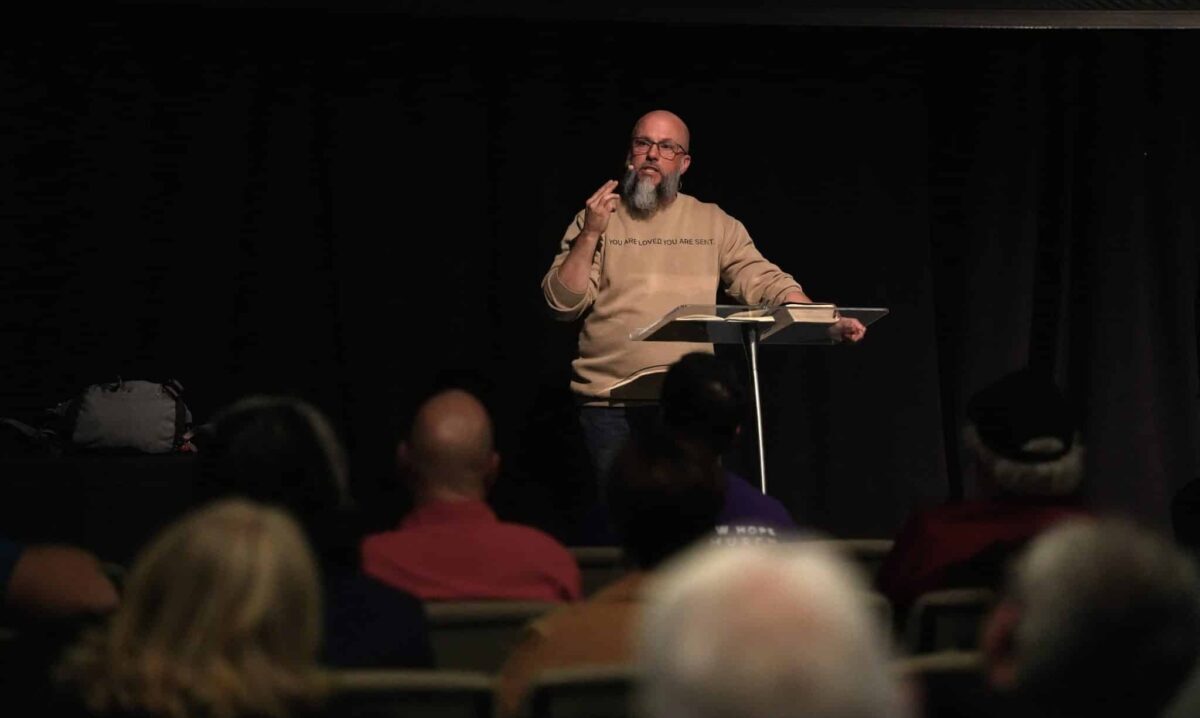
Churches hoping to engage younger generations must move beyond comfort, familiarity and fear, according to Rayden Hollis, lead pastor of Red Hill Church, Glen Carbon, Illinois. Hollis, also a church planter and revitalization leader, said many congregations fail to reach the next generation not because of limited resources, but due to misplaced priorities and a reluctance to embrace risk.
At the recent Illinois Leadership Summit, Hollis outlined five common reasons churches fail to connect.
1. Churches have “abandoned the call to open water” by focusing too heavily on caring for existing believers rather than engaging those outside the faith. While discipleship is essential, Hollis said, churches were commissioned to actively share the gospel in everyday life, where many people may never otherwise hear it.
2. Churches prefer comfort and conflict-free environments over shared mission. “The absence of conflict is not necessarily a sign of health,” Hollis said, warning churches can mistake quiet stability for spiritual vitality. True unity, he said, is formed through obedience and movement, not avoidance.
3. Churches tend to feel morally or culturally superior rather than bearing the burdens of those who don’t know Christ. He criticized attitudes that treat cities, younger generations or cultural change as problems to complain about rather than mission fields. “Lost people are not the enemy,” he said, and criticism accomplishes little without action.
4. Churches forgetting the urgency of time. Citing Psalm 90, Hollis reminded attenders that life and ministry opportunities are limited. Passing faith to the next generation, he said, cannot be assumed or delayed. “Christianity is always one generation away from extinction,” he noted, emphasizing the responsibility to disciple intentionally.
5. Churches give up too soon. Reaching the next generation is slow, costly and can be discouraging, but quitting before fruit appears prevents long-term impact. Faithfulness, he noted, matters more than immediate results.
Hollis, who planted Red Hill Church to reach the community at SIU Edwardsville, challenged leaders to treat reaching young people as an obedience issue rather than a strategy debate. Start by loving one person, building consistent relationships outside church walls, and taking the initiative rather than waiting for others to come to them.
Hollis urged leaders to give young people real authority, allow them to try and fail, and publicly honor their efforts. Churches, he said, should celebrate sending people out on mission rather than clinging to attendance numbers or comfort.
Hollis concluded telling the leaders to continue with perseverance and prayer. “Don’t be the link in the chain that breaks… Just go and do,” he said, and faithfully pass hope to those who come next.
Watch all main session videos from the 2026 Illinois Leadership Summit at https://www.youtube.com/@IllinoisBaptist.
EDITOR’S NOTE — This story was written by Eric Reed and originally published by the Illinois Baptist.