
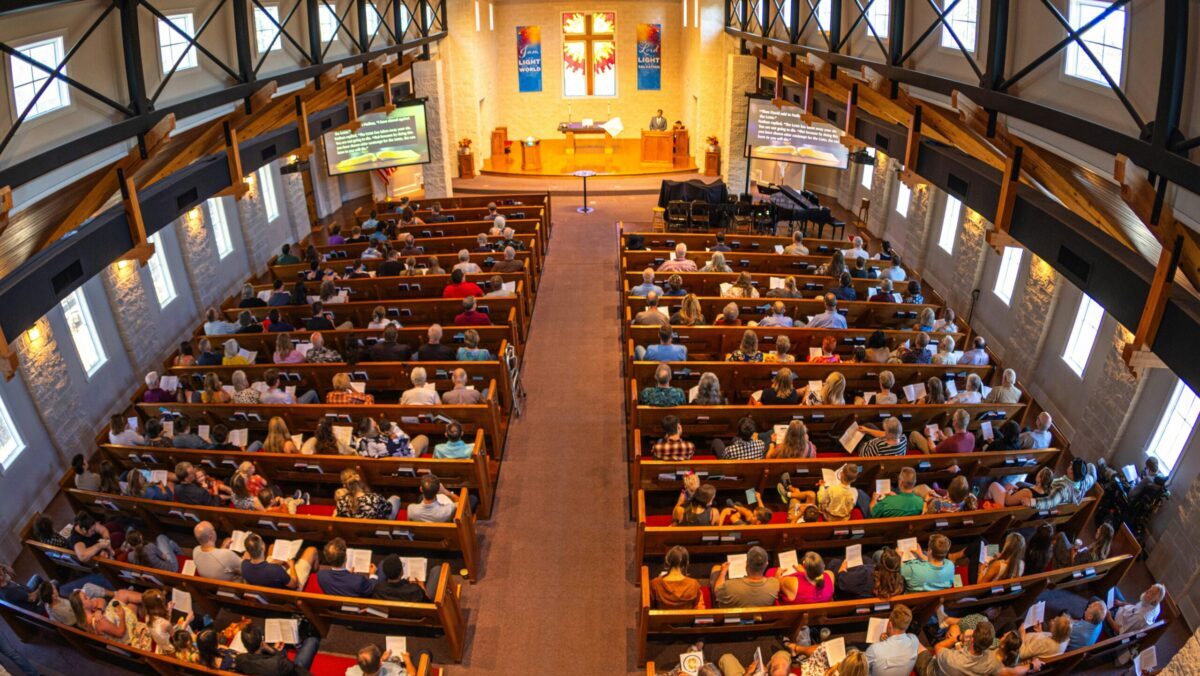
Writing and presenting the associational letter for the annual meeting was a fellowship-building tradition during the first 200 years of Baptist associations in America.
What did congregations write about in these letters?
First, expressions of fellowship with their association were conveyed through greetings, gratitude for the support of their sister congregations and affirmation of their common bond as Baptists.
Second, statistical information including membership, attendance, new converts, baptisms and other relevant data was included. They might go beyond sharing numbers and also include stories to highlight the statistics.
RELATED: Check out more articles on the impact of Baptist associations.
Third, they included reports on significant activities such as the calling of a new pastor, the construction of a building or evangelism and missions projects. Perhaps they celebrated a hallmark congregational anniversary or experienced a significant spiritual revival.
Needing ‘tangible assistance’
Fourth, congregations might need some tangible assistance from their family of congregations or guidance on an issue or activity they were planning. These often were petitions for mutual support.
Fifth, they could request dialogue surrounding a doctrinal issue, a congregational governance practice or a new challenge they faced. They sought advice or clarity on doctrine and practice.
Doctrinal dialogue — even debate — may have been lively.
We must realize Baptists clustered around various doctrines and practices. There were General Baptists, Particular Baptists, Regular Baptists and Separate Baptists, among other affinity groups. Multiple perspectives might exist in the same association, particularly among clergy.
This made their annual gatherings lively experiences of family, fellowship and faith. These events could span multiple days.
For the first 100 years of Baptist associations in America, there was no formal strategy to establish regional and national denominational organizations. Hardly any denominational movement existed beyond that of the local association.
In Southern Baptist life, the first state convention was established in South Carolina in 1821. Not until 1845 was there a “southwide” denomination formed in Augusta, Georgia.
With economic, communication and travel challenges, the association remained the primary form of denominationalism the majority of congregations experienced for many decades.
The shift from stories to statistics
The primacy of the association in Southern Baptist life shifted incrementally over the course of many years following the formation of a national denomination. Significant shifts can be dated to the decades following World War I and World War II.
Historically, the decade following each of the two world wars was a period during which leaps occurred in the organizational development of the Southern Baptist Convention.
For example, the SBC began collecting congregational statistics soon after its founding in 1845. In 1921, the Southern Baptist Convention Handbook began being published annually. It contained the compilation of the Uniform Church Letter, which churches were asked to complete each year.
Notice the change from what was known as the associational letter to the uniform church letter. You should notice a shift from stories to statistics. However, traditions die hard. I still recall people referring to the annual report as the Associational Letter throughout the 1990s.
In 1990, the uniform church letter was changed to the annual church profile. The Southern Baptist Convention handbook continued to be published through 1993.
The decade or so following World War II was a time of significant development of SBC organizational structures and expansion into all of the U.S. states. Many state conventions added staff people who had direct responsibility for working with associations. My father was one of these in North Carolina, focusing on associations in rural and small-town areas.
In urban and metropolitan areas, associations began making organizational and staff progress to develop their own structures. Some had associational missionaries who served them before World War II, but after this war the number increased significantly.
With the development of a larger organizational model, increased staff and expansion to the entire U.S., the denomination’s organizational structure sought more specific statistical information on SBC progress. The shift from stories to statistics was codified.
Congregational stories were often featured in news journals published by state, regional and national Baptist publications. But the formal presentation of an associational letter largely disappeared. This was a significant loss to the quality of the fellowship within associations.
Next: How can we formalize telling the stories of congregations anew rather than primarily collecting statistics?
Should we launch a new effort to do this?
EDITOR’S NOTE — George Bullard spent 45 years in denominational ministry. He served on the staff of three associations, was a key staff person working with associations in two state conventions and served on the association missions division staff of the former Home Mission Board of the SBC. He retired in June 2022 as director of Columbia Metro Baptist Association in South Carolina. He has led strategic planning processes in more than 100 associations and has written extensively in this area. Bullard now serves as a strategic thinking mentor for Christian leaders through his ForthTelling Innovation ministry and a correspondent for The Baptist Paper.
To request permission to republish this article, email news@thebaptistpaper.org.