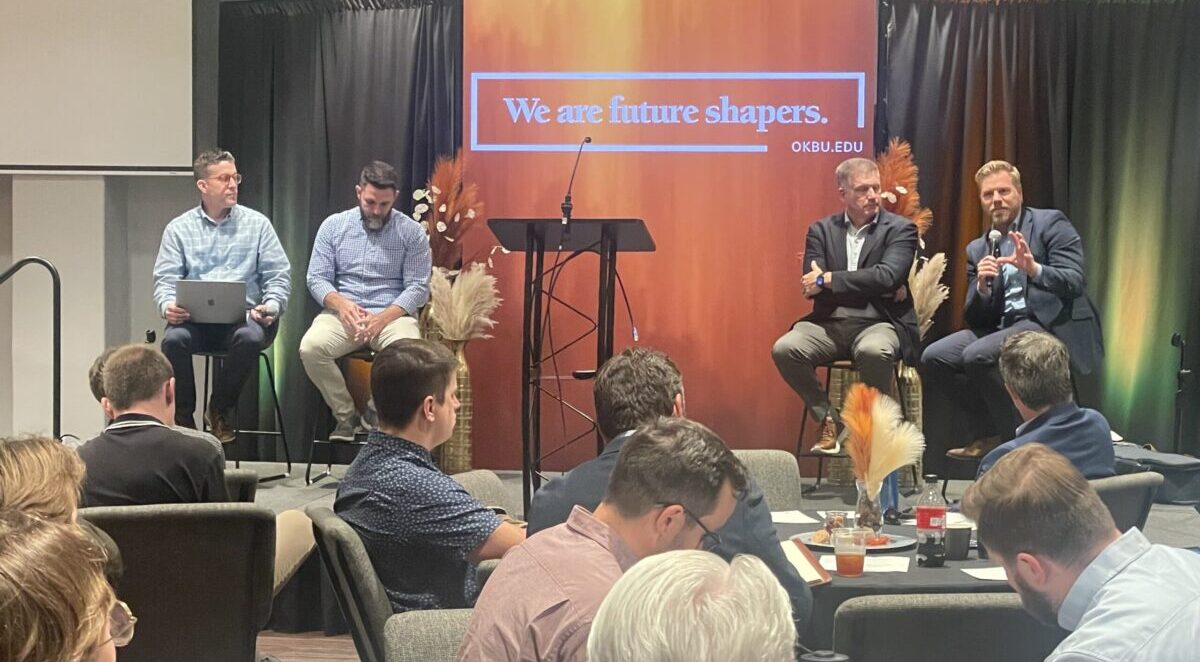
Highlights from a recent conference on “Retrieving Nicaea for Evangelicals,” which was sponsored by the Center for Baptist Renewal and held at Oklahoma Baptist University:
“The Nicene Creed is a faithful summary of the Bible. We shouldn’t shy away from these creeds to guide us.”
—Brandon Smith, associate professor and chair of the Hobbs School of Theology and Ministry at Oklahoma Baptist University
For more stories at your doorstep, subscribe to The Baptist Paper.
SIGN UP for our weekly Highlights emails.
“Responsive readings, common confession, common worship, spoken word… there is something wonderful about standing together and saying this is what we believe.”
—Stephen Presley, professor at Southern Baptist Theological Seminary
“The creed should strengthen or bolden our thought of Scripture. The best creeds guide us back to Scripture; they guard from heresy. Test each word in creeds with Scripture.”
—Oren Martin, associate professor of Christian theology at Southern Baptist Theological Seminary and pastor of equipping at Providence Church in Frisco, Texas
Starting point for theology
“Integrate creeds into your discipleship time. I took a Wednesday night, and we walked through the Apostles Creed highlighting Jesus is the starting point for theology.”
—Winston Hottman, associate pastor at Lake Highlands Baptist Church in Dallas and director of the Center for Baptist Renewal
“Nicaea starts from a confidence that this is the Savior and He is the only one who can save us. He has to be God. He could not do this without being God. … The Son heals human nature by destroying sin. Here are two natures of Christology: fully God and fully human. … He has double consubstantiality with us and the Father … His natures [are not separate from each other].
“The gospel [is Jesus’] birth, life, death, resurrection and ascension. … Through the atonement we can become adopted sons of the Father.”
—Fred Sanders, a systematic theologian and professor at Torrey Honors College at Biola University in La Mirada, California