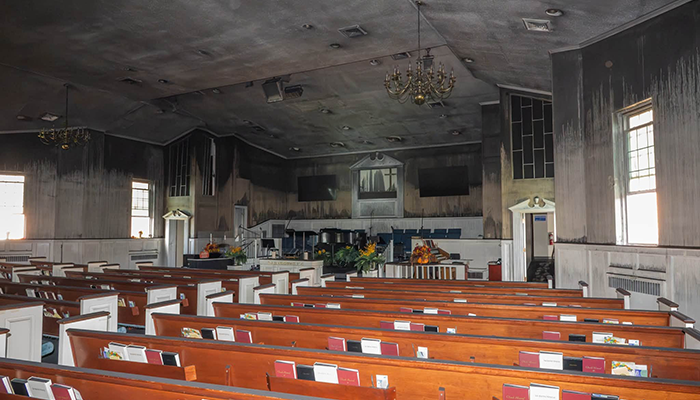
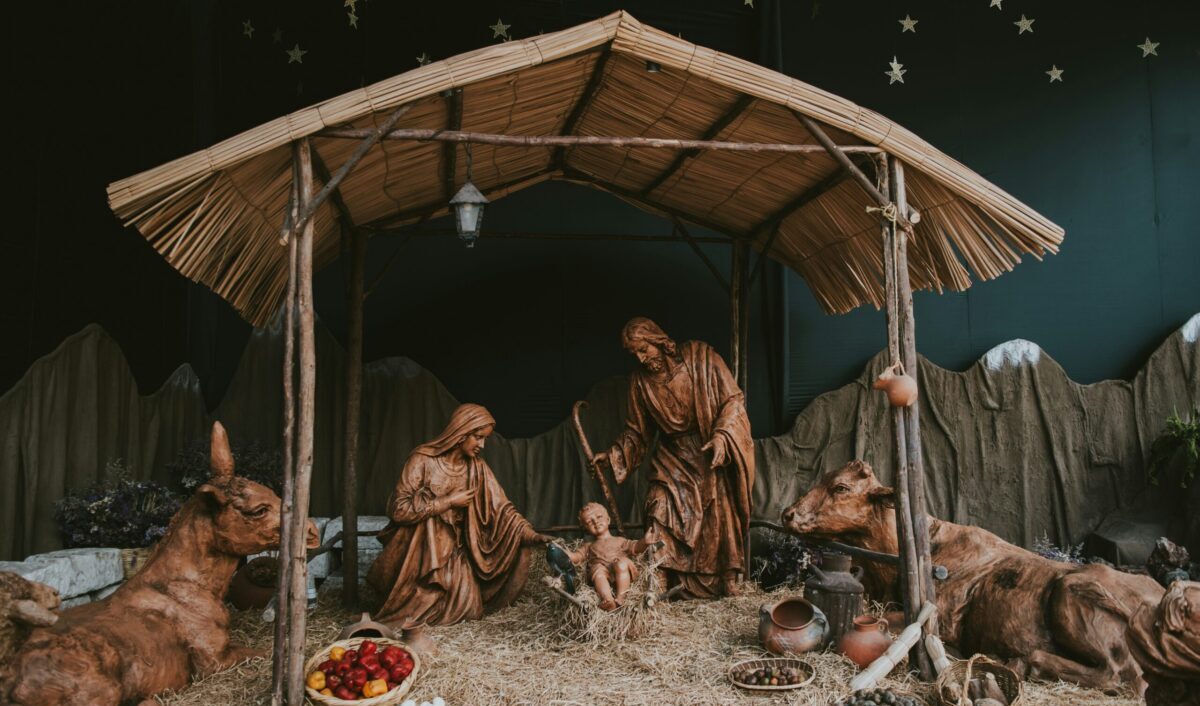
For many, images of glowing lights, nostalgic carols, bountiful tables and family gatherings are synonymous with Christmas. Jubilant declarations of peace on earth and good will toward men warm our hearts with the hope of Jesus Christ. Yet, amidst our celebrations is a dark underbelly that, though suppressed, competes for our attention every December. The tension between the nativity story’s promises and the world’s fallen realities can be jarring.
RELATED: Check out more articles on faith and culture from pastor Adam Dooley.
For more stories at your doorstep, subscribe to The Baptist Paper.
Thus, in what is supposed to be the most wonderful time of the year, our grief feels sharper. Our burdens seem heavier. Our conflicts appear more irreparable. Our brokenness becomes impossible to mask. Loneliness chases us mercilessly at Christmas. The deafening silence of an empty chair at the family table exposes our hidden sorrow. Our anguish, doubt and anxiety compound while the world around us makes merry. The burdens of life can easily steal our festive joy.
These tensions should not surprise us.
We quickly forget that imperial injustice forced Mary and Joseph to Bethlehem on the first Christmas, making their already impoverished lives more difficult (Luke 2:1–7). Once they arrived, there was no room nor compassion for them at the local inn. All the while, in the background, were harsh, gossipy believers who reeked of superiority as they whispered about a pregnancy mistakenly assumed to be illegitimate. Circumstances like these were hardly joyful or triumphant.
In the months following our Savior’s birth, Herod plotted Jesus’ demise even as magi from the east were anxious to celebrate His arrival (Matt. 2). Matthew’s account of Bethlehem’s welcome reception for Jesus is nothing like a sentimental postcard, but abounds with jealousy, injustice, sin, and suffering instead. The contrasting hatred of King Herod with the hopeful presence of the wise men exposes the same tension we often feel at Christmas even today (Matt. 2:1-12).
Good guys and villains
The good guys and villains in this familiar story are easy to identify. Perceiving the Christ child as a threat to his fragile kingdom, Herod plots to kill the toddler (Matt. 2:8). Equally offensive in the narrative are the religious leaders who knew exactly where the Messiah would be born but refused to worship Him due to their own insecurities (Matt. 2:4–6). The ordeal is not without hope, though. The presence of the magi is proof that Jesus would be a Savior for Jew and Gentile alike. Their gifts of gold, frankincense, and myrrh were fitting for the newborn King (Matt. 2:9–11).
The point is not, however, that we should celebrate some while loathing others. Matthew wants us to stop and consider who we are more like. Do we put our hope in Jesus, or do we express hate for Jesus? Before answering, we should acknowledge that the answer may not be as simple as it seems.
Far too often we are much more like Herod than we care to admit. Without scriptural diligence, we may very well worship a god made in our own image rather than the biblical Jesus. One who exists to make us happy. One who requires nothing of us and gives everything to us. One who is anxious to build our kingdom rather than his own. Could this be why we love the festivities of the season, but scoff at the notion of God’s holiness? Or that we are willing to bellow out Christmas hymns while simultaneously enjoying our blatant disobedience to God’s Word?
We might sing “O Little Town of Bethlehem” without having any interest in worshipping Jesus in every place, every day. We might sing “O Holy Night” without the slightest intention of living a life of holiness and obedience. We might sing “Away in a Manger” without being anxious for God to have His way in our lives. We might even ask “Mary Did You Know?” while never considering what we know and how it impacts our daily lives. Like Herod, we can easily be guilty of craving our own kingdom and doing anything to get it. Like the chief priests and scribes, we might choose to ignore what we know from Scripture simply because it interferes with our lust for power or influence.
And this is precisely the problem.
Tipping our hat toward Christ is not equal to bowing to Him as our King. Our Savior requires more than our leftovers. Mere acknowledgment of Jesus for the sake of the season is not salvation. He desires to be more than a good luck charm that justifies any means we choose in pursuit of our goals and aspirations. Christ refuses to be remade in our image. Part of the tension we feel is due to our chasing dreams that are outside of His will. Herod may very well be staring back at us in the mirror.
But, even when our lives resemble the worshipful hope of the wise men, we remain in a broken world where many of God’s promises have yet to be realized. Sinful consequences obnoxiously obscure the comforting future reserved for the saints.
Thus, we find ourselves waiting for what will be even though it currently is not. The tension is real, but Christmas is an invitation to keep going when you do not understand God’s ways, do not agree with His timing and do not feel His presence.
EDITOR’S NOTE — Adam B. Dooley is pastor of Englewood Baptist Church in Jackson, Tennessee, and author of “Hope When Life Unravels and Exalting Jesus in 1-2 Chronicles.”