I pastor a small church in the country — 45 minutes or so from the closest stop light. We average about 25 people in worship. Some of them drive half an hour to get to our church building.
Nothing but farms for miles and miles. I never imagined that from a little church like ours, I would read on our YouTube channel: Your channel got 26,291 views in the last 28 days.
For more stories at your doorstep, subscribe to The Baptist Paper.
SIGN UP for our weekly Highlights emails.
Twenty-five attend our worship service. Twenty-six thousand hear the gospel through our YouTube channel. And, we just got started. What a time to be alive.
We have had a YouTube Channel for years. We didn’t work at it and didn’t see much results — maybe 20 or so views a week. I dumped a video onto YouTube without a lot of thought as to title or thumbnail or keywords, etc. Last month I preached from Acts 17:17 (NIV): “So he reasoned in the synagogue with both Jews and God-fearing Greeks, as well as in the marketplace day by day with those who happened to be there.”
It occurred to me as I meditated on this verse that location matters. Paul went first to the synagogue because that is where his people were. But, apparently, he realized that most Athenians were never going to go to the synagogue. So he went where the people were — he went to Areopagus (also known as Mars Hill).
If not church, where?
This got me thinking: Where might people go in our time to hear the gospel if they don’t go to church on Sunday morning?
Answer: YouTube. I asked ChatGPT to summarize YouTube’s reach and here is what it returned:
YouTube’s reach in 2025 is truly massive: the platform has around 2.5–2.85 billion monthly active users worldwide — meaning roughly a quarter to a third of the world’s population checks in regularly with over 122 million daily active users in some estimates. People watch more than a billion hours of video every day, and in the U.S. alone it logged over 45 billion viewing hours in the first half of 2025. Creators upload an astonishing hundreds of hours of video every minute (commonly cited around 360–500+ hours/minute) to keep the library growing, and the platform now hosts billions of videos across long-form content, shorts, and live streams.
Getting serious about reaching people
I decided to get serious about reaching people with the gospel through YouTube. As it turns out, there are a lot of videos on how to do this. Without getting too deep into the weeds, here is what I have learned so far:
- Write titles people want to click on. Make the titles sound like a Reader’s Digest cover article and give biblical answers. “How to win over worry” is better than “Lessons from Hezekiah.”
- Thumbnails: If they don’t click, they don’t view.
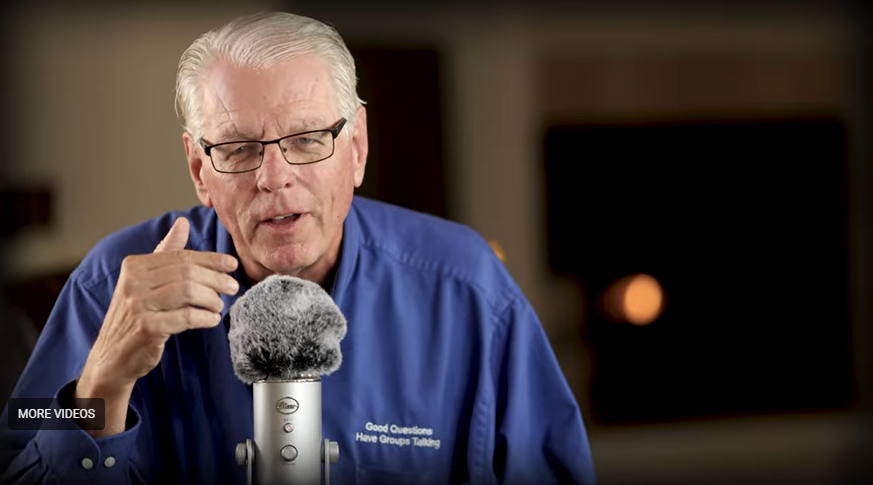
- Production quality: I make my videos in my home studio because I can better control the lighting and the sound. I can’t get great production quality in our little church. I can get close in my home studio. As I serve as a bi-vocational pastor, I do wedding photography as one of my side-hustles so I have access to a good camera and lens. Truthfully, lighting and sound probably make more difference than how much you spend on the camera. You can evaluate for yourself: https://www.youtube.com/@Josh-Hunt
- Keep learning: I don’t pretend to be a YouTube expert and still have a lot to learn. The good news is that there are plenty of resources out there to help. I watch several videos every day on how to grow a YouTube channel.
- Be interesting: One of the depressing things about YouTube is you can see how many people click away and how quickly. An embarrassing number click away in the first 30 seconds. One of my goals for both my preaching and my YouTube is to be more interesting. Acts 14:1 (NIV) “At Iconium Paul and Barnabas went as usual into the Jewish synagogue. There they spoke so effectively that a great number of Jews and Greeks believed.” Note that the number of people who believed is tied not to the essential message, but the effectiveness of the presentation. I think if Paul and Barnabas had a YouTube channel, not many would click away.
Commenting on Luke 15.1, Tim Keller said, “Jesus’ teaching consistently attracted the irreligious while offending the Bible-believing, religious people of His day. However, in the main, our churches today do not have this effect. The kind of outsiders Jesus attracted are not attracted to contemporary churches, even our most avant-garde ones. We tend to draw conservative, buttoned-down, moralistic people.
The licentious and liberated or the broken and marginal avoid church. That can only mean one thing. If the preaching of our ministers and the practice of our parishioners do not have the same effect on people that Jesus had, then we must not be declaring the same message that Jesus did. If our churches aren’t appealing to younger brothers, they must be more full of elder brothers than we’d like to think.” (Timothy Keller, “The Prodigal God: Recovering the Heart of the Christian Faith,” 1st ed). (New York: Dutton, 2008), 15–16.
- Above all, be biblical.
- Oh, and don’t forget to pray.
In December, I began to work the plan. When I worked the plan, the plan worked:

I don’t know what tomorrow holds. Maybe our views will spike; maybe they’ll dip. Maybe 26,000 will become 260,000 — or maybe God will say, “That’s enough.”
But here’s what I’m learning: faithfulness is still the assignment. Show up. Speak up. Put your little loaves and fishes in His hands and let Him do the multiplying.
A country church of 25 can preach the gospel to the nations. An old bi-vocational pastor can turn on a camera and see God breathe life into ordinary words. And a world that will never drive out to my little church in the pecan fields might just meet Jesus in their living room—because the gospel showed up where they already are.
It’s a new Areopagus.
And the fields are still white for harvest.
Use what you have. Go where people are. Trust God with the rest.
EDITOR’S NOTE — This article was written by Josh Hunt, a pastor and author in Las Cruces, New Mexico.