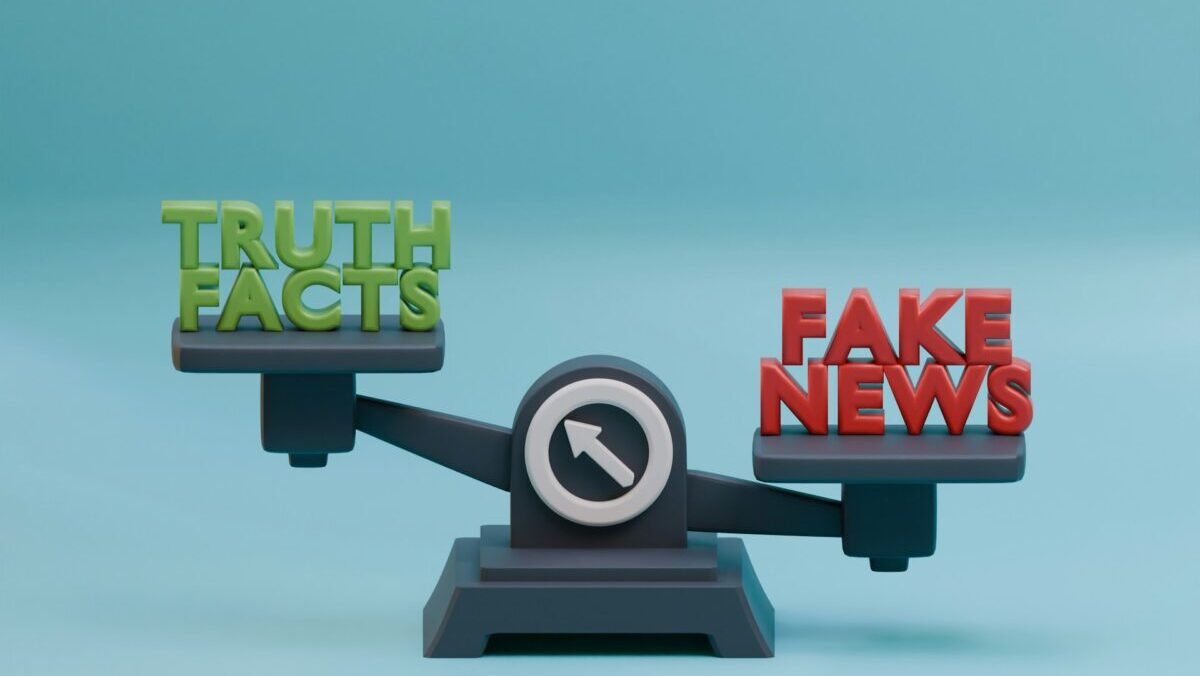
I regularly hear the voice of William D. Downs Jr. echoing in my mind.
Dr. Downs was the department chair and professor of communications and journalism at Ouachita Baptist University for 41 years.
He was relentless, hounding us want-to-be reporters like a military drill instructor, which made more sense after learning he’d been one in the early 1950s.
Want more stories on AI and ministry? We have them. Click here for more.
He took journalism seriously and demanded that graduates of his program take it seriously too. He recited an endless stream of memorable maxims that applied to our future careers as reporters. Example: “If your mother tells you she loves you, get three sources.” Another: “Trust no one and assume nothing.”
Verify, verify, verify
The point: Respectable journalists pursue facts, verify them, and verify them again, regardless of the source.
But this one is a close companion in a world increasingly shaped by artificial intelligence: “Don’t believe anything you hear and only half of what you see.” I would amend his statement these days to: “Don’t believe anything you hear or anything you see.”
However, the multitude of people, including Christians, who believe so much of what they see and hear these days is concerning. They accept as truth the AI-generated content flooding social media, and even mainstream news, because they lack discernment.
An example is the surge in AI-generated war videos related to the present conflict with Iran. Videos showing an Iranian counterstrike against Tel Aviv and Dubai’s Burj Khalifa — the tallest building in the world — are fake.
The posts have frequently been reposted on the social media platform X and seen by millions. Sadly, when journalists at BBC asked the AI chatbot Grok to verify the videos, the chatbot incorrectly insisted the AI-generated footage was real.
Ironically, Facebook and X both have fact-checking tools intended to combat so-called fake news. Yet many users dismiss the fact-check itself as false, especially when it challenges their preexisting views.
Scary reality
A recent study by communications psychologists at University College London found that participants who watched deepfake videos were still influenced by the content even after being told the videos were fabricated.
Did you catch that?
People knew something was false and chose to believe it anyway.
The problem is only getting worse. A 2024 study from researchers at Cornell University found that over a one-year period AI-generated misinformation increased 57.3% on mainstream websites and 474% on websites dedicated to spreading misinformation.
People do not typically seek balance when forming their views, and studies show they consume news sources that reinforce their perspectives. Social media algorithms feed people more of what they already want to see, making them even more susceptible to false AI-generated news.
A global study published in Nature Human Behaviour found that participants with strong ideological views were often more confident in their ability to detect misinformation than their actual performance demonstrated. In other words, people who believe they are least susceptible to misinformation are among the most vulnerable to believing lies.
Christians are especially vulnerable if a person in whom they place high trust intentionally or unintentionally propagates false information. They tend to believe it, and share it, along with fabricated feel-good stories that contain little truth or questionable theology.
We are also guilty of spreading emotionally charged political content without fact-checking.
Too often, Christians become the definition of gullible — even fools. Proverbs 15:14 says, “The discerning heart seeks knowledge, but the mouth of a fool feeds on folly.” Proverbs 14:15 adds, “The simple believe anything, but the prudent give thought to their steps.”
‘Must do better’
We must do better. Christians must become Bereans in the age of AI-generated news and information.
The Bereans in Acts 17 were described as “noble-minded,” receiving the Apostle Paul’s message with eagerness, yet they “examined the Scriptures daily” to determine the truth of what they heard.
The Bereans remind us that faithfulness is not gullibility. They listened eagerly, but they verified carefully.
Christians must recover that same spiritual discipline of humble but careful discernment.
Being Berean begins with the discipline to wait before reposting something that provokes outrage or fear. Social media rewards speed and reaction, but discernment requires a pause.
Ask yourself, “Do I know this is true, or does it simply confirm what I already believe?”
Bereans would also:
Check multiple sources to confirm facts.
Recognize emotional manipulation and ask, “Is this objectively informing me, or emotionally inflaming me?”
‘Biblical wisdom over speculative information’
Prioritize biblical wisdom over speculative information. Endless news consumption, especially hours watching singular news sources or consuming algorithm-driven news and social media feeds, can distort perspective and fuel anxiety.
Remember that truthfulness is a Christian witness. Sharing misinformation damages a Christian’s witness, and put bluntly, sharing unverified claims is a modern form of bearing false witness.
There is a rising tsunami of AI-fabricated news and information destabilizing our culture, bombarding our senses, disorienting our perspective and attacking the truth.
We may not need three sources if our mothers tell us they love us, but we do need to pause and consider whether we can believe what we hear and see before embracing it as true.
EDITOR’S NOTE — This article was written by Chris Turner and originally published by the Baptist and Reflector.