
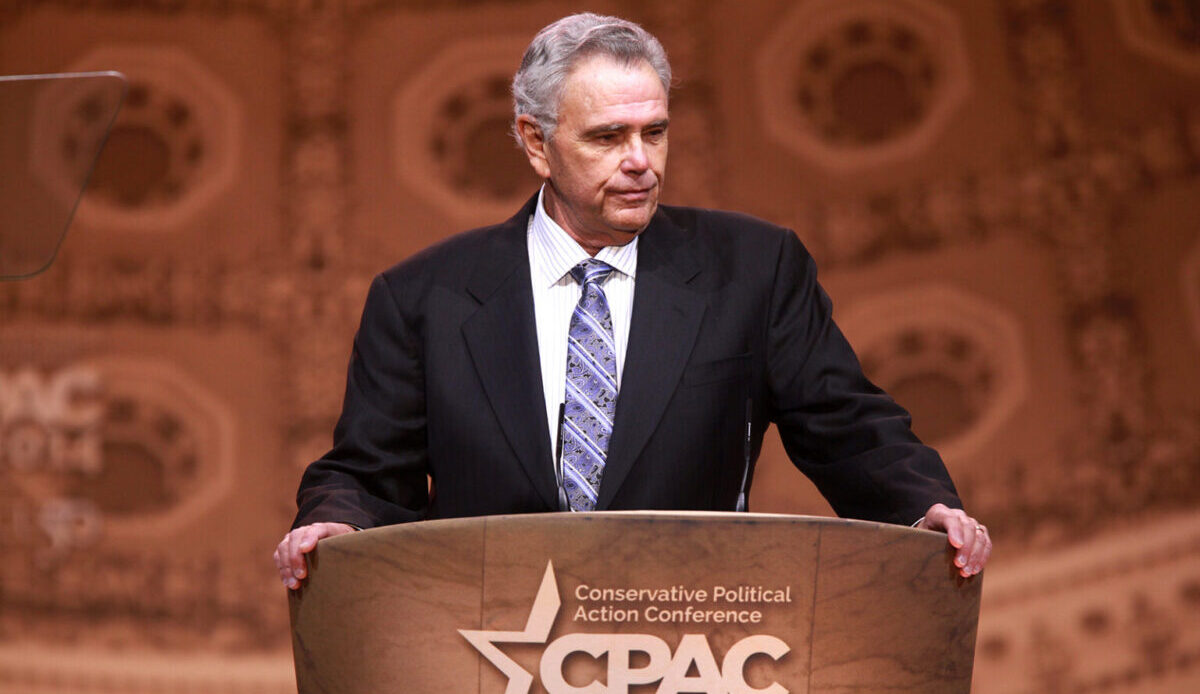
James Robison, a televangelist, author, friend of politicians and key figure in the Moral Majority movement who later led a humanitarian organization, died Saturday (May 16).
He was 82.
“It is with deep sadness that we share the passing of Rev. James Robison, the beloved founder of Life Outreach International,” the board of directors of the ministry Robison founded said in a statement. “James devoted his life to sharing the gospel and bringing hope, help, and healing to those in need around the world. Together, James and Betty stewarded a ministry that has touched countless lives and will continue impacting generations to come.”
‘Dysfunctional’ childhood
Born Oct. 9, 1943, in Houston, Robison had what his ministry called a “dysfunctional” childhood. His mother, a nurse, was assaulted by the son of a patient, according to his official bio, and became pregnant as a result. She placed her son, Robison, with a Baptist couple that she had found in a newspaper ad.
That couple raised him for five years before he returned to his birth mother. As a teenager, Robison returned to live with his adopted family, the Hales, during high school in suburban Houston. While living with them, he met his future wife, Betty, and felt a call to ministry — and began preaching at 14.
In 1963, he left college to start the James Robison Evangelistic Association and began a preaching ministry that would last decades, bringing him into contact with politicians and celebrities.
“I don’t believe it would hinder an evangelist to get an education, but it might. It might take away something God is trying to say,” he told Texas Monthly magazine in 1981.
Forging a partnership
Along with Jerry Falwell and Pat Robertson, Robison helped rally evangelicals to support Ronald Reagan’s run for the White House in 1980, and helped forge a partnership between evangelicals and the Republican Party. Reagan appeared at a 1980 Dallas gathering of ministers, including Robison, meant to get pastors more involved in politics.
In the 1980s, he began to embrace charismatic Christian practices, which put him at theological odds with some Southern Baptist leaders he had ministered with.
EDITOR’S NOTE — This story was written by Bob Smietana and originally published by Religion News Service.