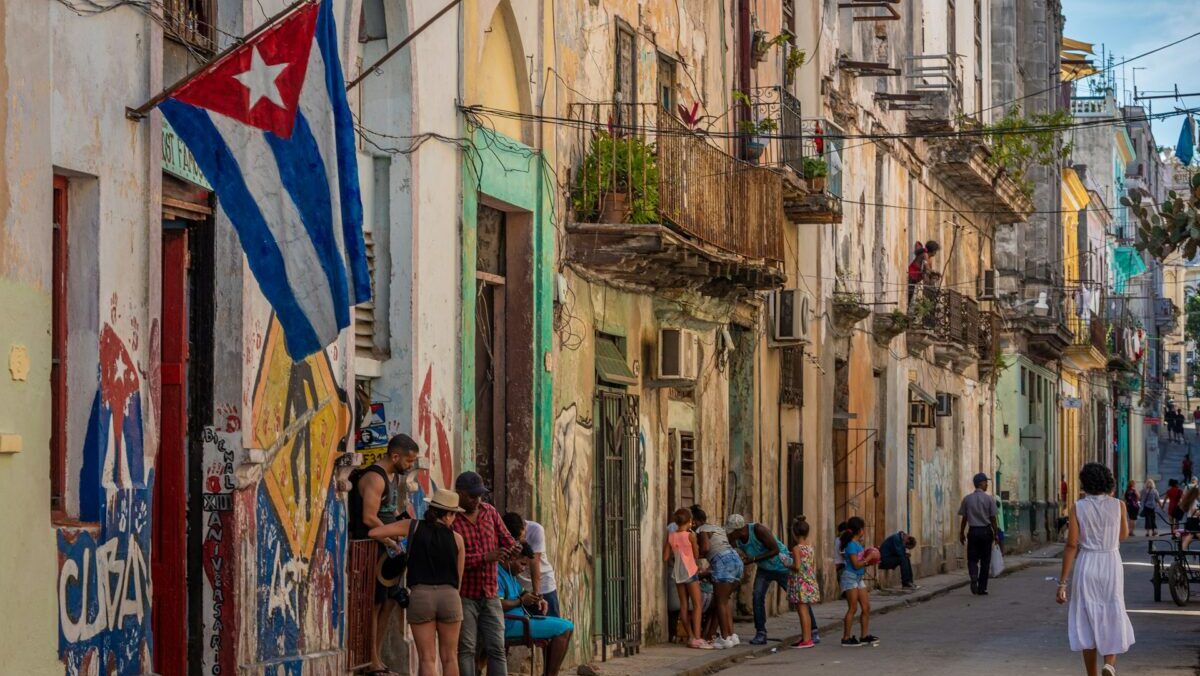
Cuba’s communist government on Thursday (June 18) announced sweeping economic reforms, the largest privatization since before Fidel Castro’s revolution in 1959. Amid various mounting internal and external pressures, faith communities have been speaking up and meeting with both the U.S. and Cuban governments.
Stay updated on stories like this — Get news delivered to your inbox
In the last few months, the top U.S. diplomat in Cuba, Mike Hammer, has met with top Catholic bishops, a Catholic priest known for being critical of the Cuban government, a Methodist bishop and members of the Alliance of Evangelical Churches in Cuba, which includes several groups more often critical of the government, including the Assemblies of God.
Despair has become intense, said Rita María García Morris, the executive director of the Centro Cristiano de Reflexión y Diálogo (Christian Center for Reflection and Dialogue) based in the Cuban province of Matanzas, who with her team has helped meet the daily needs of vulnerable people and to advocate for peace, including several meetings with Hammer and U.S.-based pastors.
Ongoing challenges
“Suicide, mental illnesses and hopelessness are extreme, extreme,” said García Morris in Spanish. “Our psychologists cannot keep up. We have a team of psychologists working even at night with phone calls, and they cannot keep up.”
García Morris, a Presbyterian ruling elder, said that suffering due to days-long blackouts and spoiled food is widespread. In December, she had to travel to the Dominican Republic because she had developed diabetic ketoacidosis, a condition that can become life-threatening, because she was not able to keep her insulin refrigerated.
She told RNS she is waiting to see how the economic reforms will affect the population. “Where does that leave the poor people and the humble people?” she asked.
Cuban state media has said the survival rate for children with cancer has fallen from 85% to 65% since the oil blockade began and that more than 75% of essential medications produced on the island can’t be made right now because of unavailable components.
The power outages and lack of flour are also limiting the Catholic church’s ability to produce unconsecrated bread for Communion. Puerto Rican parishes and Dominican religious sisters worked to send nearly 300,000 hosts to Cuba this month.
Outreach Aid to the Americas (OAA) distributes humanitarian aid to Cuba through largely evangelical churches independent from the government.
Teo Babun, OAA’s Cuban-American president and CEO, was quoted on the important role of faith communities in a 2004 Bush administration report issued by the Commission for Assistance to a Free Cuba. The evangelical businessman told RNS that “most of those reports interestingly enough are applicable today.”
‘Greater surge’ of aid on the way?
He expressed confidence that the U.S. government and evangelical organizations are ready to provide a greater surge of humanitarian aid, even before a regime change.
“ We are aware of a lot of conversation taking place regarding Cuba and the aid that needs to be put together,” he said. “ They are becoming more and more familiar with the fact that the evangelical church has tremendous, broad resources and experience working in Cuba to be able to assist in providing humanitarian assistance at the right time.”
Since the beginning of the year, the U.S. State Department has funneled humanitarian aid to Cuba through the Catholic church, citing concerns about government corruption. The first batch of $3 million was designated after last fall’s Hurricane Melissa and took over four months to distribute.
The State Department announced in February another $6 million in aid to be distributed through the Catholic church, but Secretary of State Marco Rubio said in May that half of that amount was still being held up by Cuban government permitting. The department made a third offer of $100 million in assistance distributed through both the Catholic church and “other reliable independent humanitarian organizations” last month.
Full story.
EDITOR’S NOTE — This story was written by Aleja Hertzler-McCain and originally published by Religion News Service.