
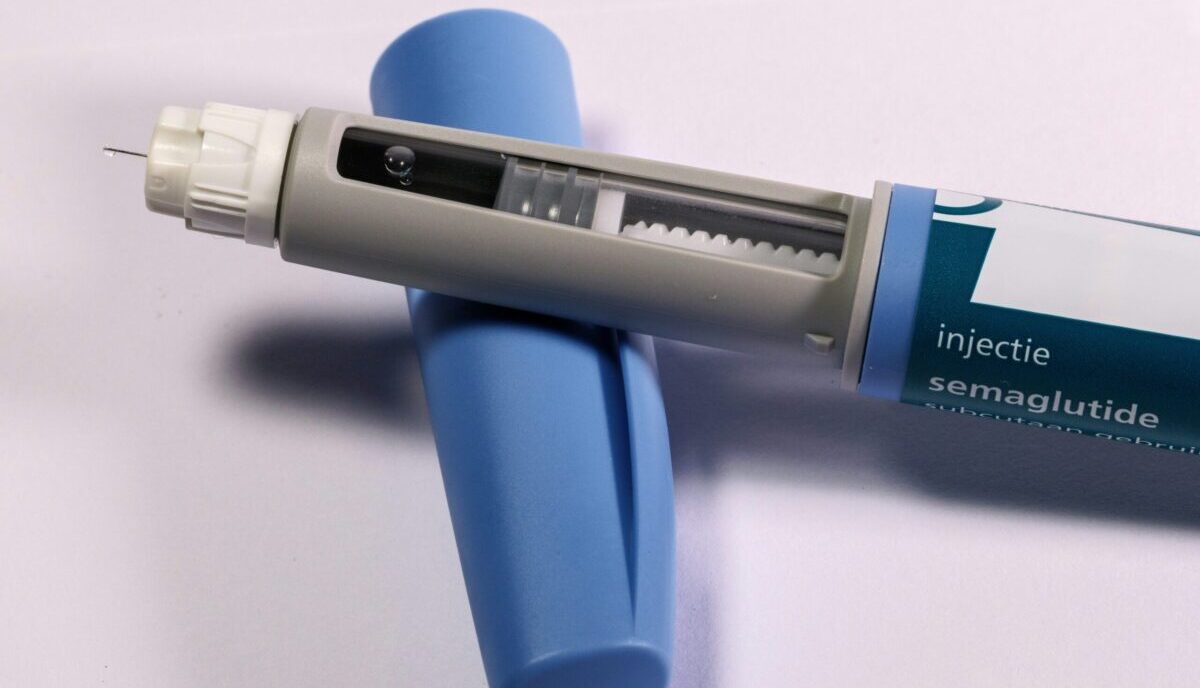
Editor’s note: This article is intended for informational and commentary purposes only and do not constitute medical advice. If you are considering a GLP-1 medication, consult your healthcare provider to determine what is right for you. See the following editorials for more commentary: “GLP-1s and the question of self-control” and “Can GLP-1s be a lifeline?“
GLP-1s, or glucagon-like peptide-1 receptor agonists, have saturated the news, social media and pharmacy ads.
Drugs like Ozempic, Wegovy and Zepbound dominate the conversation, and often carry more misunderstanding than almost any medication of the moment.
Stay updated on stories like this — Get news delivered to your inbox
One in eight American adults currently takes a GLP-1 drug such as Ozempic or Wegovy — either to lose weight or treat a chronic condition — a figure that has risen significantly since 2023, according to a November 2025 Kaiser Family Foundation Health Tracking Poll. Women outpace men in usage (15% vs. 9%).
For years, the simplified explanation was: They make you feel full, so you eat less. Recent research shows that’s incomplete.
The gut naturally releases GLP-1 after eating. It signals the pancreas to produce insulin, tells the brain you’re full, and slows digestion.
But newer research shows these drugs act directly on brain circuits tied not just to appetite, but to motivation, reward and desire. They engage the same dopamine pathways that drive cravings and addictive behavior.
In short, these medications don’t just affect how much you eat. They affect how strongly you want things in the first place.
From restriction to relief?
Jake Smith*, a minister in the Memphis area, said that shift was immediately noticeable when he started taking Ozempic.
“The first week was an immediate change in my habits,” he said. “Without trying I noticed a decrease in my appetite that didn’t feel unhealthy but felt refreshing.” He recalled telling his wife, “This must be what normal people feel like when it comes to appetite.”
Day-to-day, he said, the change felt less like restriction and more like relief.
“It was an encouragement to feel like my body was under control in a certain area that had not felt that control before,” he said.
The FDA approved the first GLP-1 drug, exenatide, in 2005 for type 2 diabetes, according to the Cleveland Clinic.
For diabetic patients, GLP-1 medications help manage blood sugar by triggering the pancreas to release more insulin, while slowed digestion prevents blood sugar spikes.
To qualify for a prescription, Yale Medicine states adults must carry a BMI of 30 or higher, or a BMI of 27 or higher with at least one weight-related condition such as high blood pressure, high cholesterol, or type 2 diabetes.
Smith’s own prescription grew out of that diabetes-prevention pathway rather than a weight-loss goal.
“The reason why I began was because my doctor suggested it for the purpose of pre-diabetes levels,” he said. “When I did my annual checkup, he said he wanted to start me on Ozempic.”
Side effects
According to Stanford Medicine, the most common side effects are gastrointestinal, and they connect directly to how the drugs work. Slowing gastric emptying keeps you full longer but disrupts the digestive system.
Most frequently they can trigger nausea, constipation and reduced sensation of thirst, which compounds constipation when patients don’t drink enough water. Additionally, a recent study from the Cleveland Clinic showed nearly 1 in 5 of the 460,000 sampled adults prescribed a GLP-1 developed a nutrient deficiency within a year.
With approval for 12-year-olds and above in 2019, GLP-1 use among younger populations is climbing sharply. A peer-reviewed Journal of the American Medical Association study found that between 2020 and 2023, GLP-1 dispensing among adolescents and young adults jumped nearly 600% — from 8,722 to 60,567 prescriptions.
What if you stop taking it?
But perhaps the most significant finding concerns what happens when patients stop. A 2026 analysis of more than 9,000 patients found that people who stopped taking semaglutide or tirzepatide regained an average of nearly two pounds per month.
A year-long follow-up to the original Wegovy trial found patients had regained two-thirds of their lost weight within 12 months of stopping the medication, according to Stanford Medicine.
Smith’s experience tracked with those numbers, though he said the drug still changed his relationship with food.
“I did gain some weight back and there is a definite plateau,” he said. “But it helped to kickstart a journey that I had tried in many ways to sustain.
“Each decade of my life seemed to take much more work to lose weight with less result,” he said. “I definitely see that my habits have changed as far as food intake as a result.
“I wouldn’t say I am where I want to be, but it actually helped change some patterns and expose me to the way I could actually live and be satisfied at my hunger level.”
That outcome — whether real or incomplete change — is at the center of an ongoing debate over whether weight is primarily a matter of willpower.
Smith, who described years of consistent exercise that produced little change on the scale, said he doesn’t see it as one or the other.
“I think it’s a both-and issue,” he said. “I could track my food intake and see that it was less than a close friend who weighed half as much as me. I couldn’t understand why I would continue to gain weight while they never increased in size.”
Smith pointed to an earlier experience with thyroid medication as a turning point in how he thought about pharmaceutical help.
Years ago, he said, a doctor found his thyroid levels were low and prescribed medication, adjusting the dose over three months of follow-up testing.
“I admitted to him that I had no desire to be on medication if I could keep from it,” Smith said. He said the doctor told him that because medicine has advanced, “we have the ability to synthesize what your body should be producing,” and urged him not to avoid it.
“He said, ‘You shouldn’t avoid the medicine. You should embrace it. Your mood, energy and other areas of your life will improve,’” Smith said. “He was correct.”
Outside of that thyroid medication and his GLP-1 prescription, Smith said he takes only natural supplements.
“I don’t know if I would take a strong stance one way or the other,” he said, “but I am at peace with the decision I made to step in this direction for help.” B&R —NOTE: *Jake Smith is a pseudonym, used so he could speak candidly about his medical history.
EDITOR’S NOTE — This story was written by Zoë Watkins and originally published by the Baptist and Reflector.