
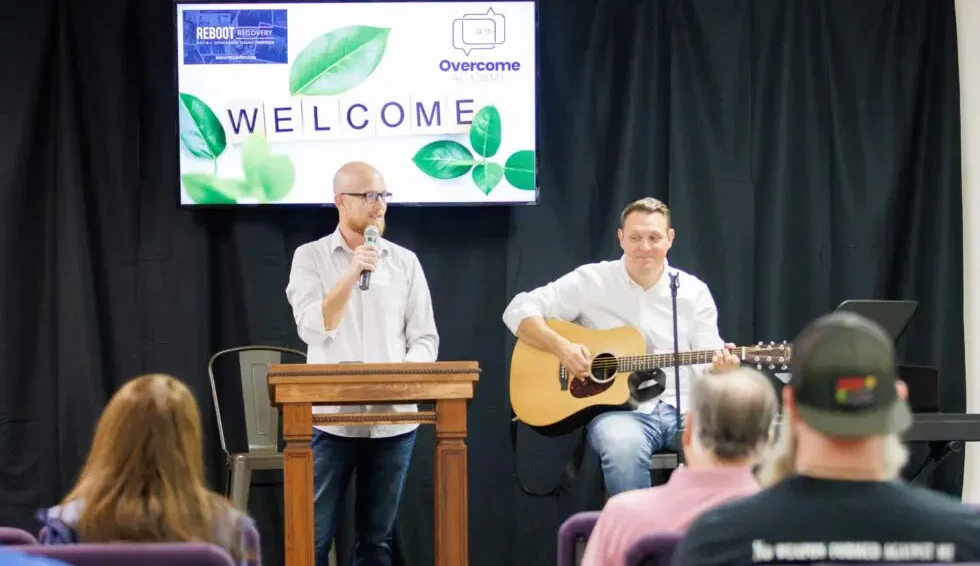
Forty people from Harford and Cecil counties in Maryland are better prepared to care for hurting people in their churches after a two-day training at Oak Grove Baptist Church.
Overcome Academy, held Sept. 25–26, was led by Evan Owens and Bryan Flanery of REBOOT Recovery, a faith-based trauma recovery ministry. The workshop taught participants how to walk alongside people through trauma, hardship and difficult seasons of life.
Oak Grove has offered REBOOT courses for eight years and has graduated more than 100 people, according to LaVerne Cash, who leads the church’s REBOOT ministry team. The church hosted the academy to share what has worked there with other congregations.
“As mental health becomes a growing concern in our communities, churches need to be prepared to minister to those with mental health struggles,” Cash said.
When churches get it wrong
Organizers said the training grew out of a familiar problem. People who turn to their church in a crisis are not always met with care. Some get a pat on the shoulder and a quick “I’ll pray for you.” Some get no response at all. Others are told they are struggling because their faith isn’t strong enough.
“When someone reaches out for support and is met with dismissal, judgment, or silence, the impact can extend far beyond that single interaction,” Cash said.
What participants learned
The sessions opened with the difference between readiness and willingness. Readiness is about capacity: whether a person has the time and energy for change. Willingness is about attitude: whether they are open to it.
Both are needed, trainers said, on both sides of a helping relationship. A person can be ready for help but unwilling to change, or willing to change but not yet ready to act.
Participants also examined three common responses to suffering that can do more harm than good:
- Stepping into someone’s struggle without being invited
- Giving advice before trying to understand
- Taking responsibility for solving someone’s problems instead of helping them navigate their own
Trainers urged curiosity, respect for boundaries and a simple message: “I am with you. When you are ready, I am here.”
Other sessions covered difficult conversations, avoiding burnout, helping people reframe and grow through trauma, and building a culture of care within a congregation.
A line from REBOOT Recovery framed the two days: “Trauma is our personal intersection with the brokenness of the world. Recovery is our personal intersection with the redemptive heart of God.”
A pathway, not a single class
REBOOT Recovery offers courses at more than 700 locations and has graduated more than 50,000 people in just over a decade, according to the ministry.
At Oak Grove, the work continues after the first course ends. Participants begin with REBOOT’s 12-week core course, which gives them tools to cope with trauma.
“Most trauma symptoms stem from a weak or sick spiritual root system,” Cash said. “The initial REBOOT course feeds and nourishes the root system to make it healthy again.”
Graduates can then take REBOOT Advance, a second 12-week course designed to strengthen those roots. It covers the plan of salvation, each member of the Trinity, Bible study, prayer and spiritual warfare.
After that, graduates can join Weekly REBOOT, an ongoing group open to anyone who has finished the core course. Cash said it helps people keep growing spiritually long after the formal classes end.
An invitation to other churches
Cash said she hopes churches will start programs of their own, and that no one needs to be an expert to begin.
“We don’t have to have all the answers to make a meaningful difference in someone’s life,” she said. “Sometimes, the most powerful thing we can offer is our presence, our compassion, and our willingness and readiness to walk alongside them.”
Churches interested in REBOOT courses or training can learn more at rebootrecovery.com.
EDITOR’S NOTE — This story was written by Somer Phoebus and originally published by the Baptist Convention of Maryland/Delaware.