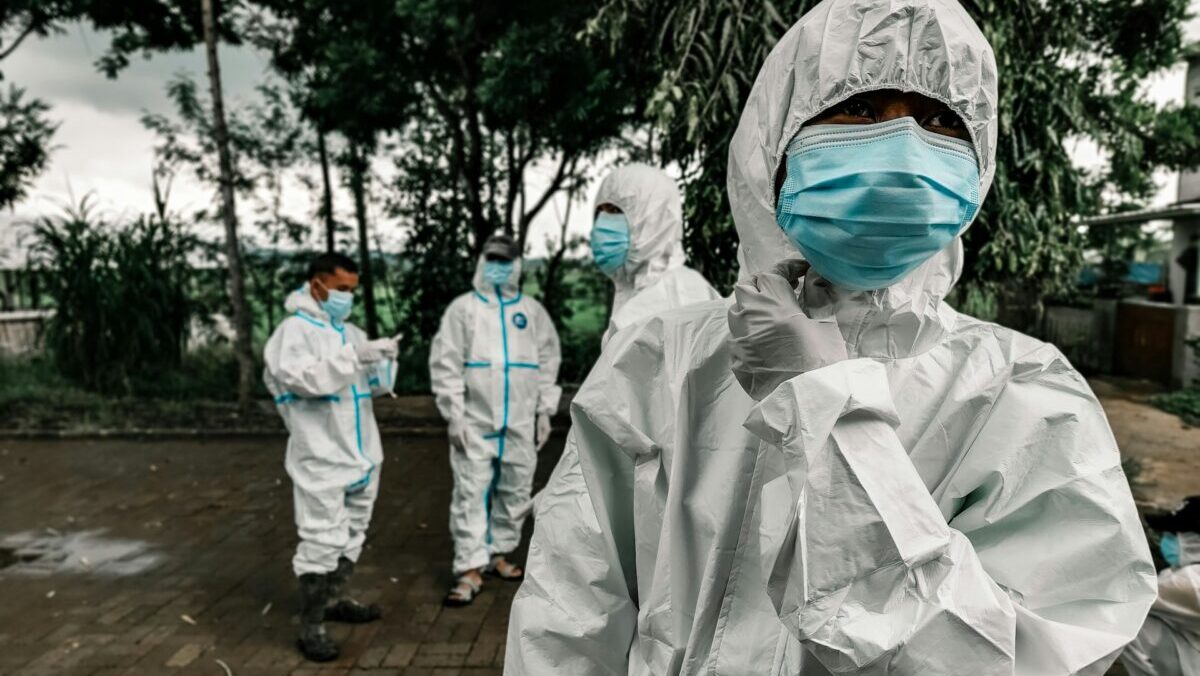
In parts of eastern Democratic Republic of the Congo, where fear and mistrust have kept some residents from seeking treatment during a deadly Ebola outbreak, religious leaders are going door to door, persuading families to cooperate with health workers and helping suspected patients reach medical facilities.
Patrick Lokombe, an Anglican lay minister in the North Kivu Province city of Beni, said some communities have resisted medical teams, particularly over restrictions on traditional burial practices. Religious leaders have been able to enter villages where health workers face hostility, he said.
“We have been able to go inside villages, talk to people about the risks of Ebola and they finally agree to give us those suspected to have the virus so that they can go and get tested,” said Lokombe, who serves in the Anglican Diocese of Nord Kivu. “This has saved a lot of lives.”
His experience reflects a growing role for religious institutions in Congo’s response to an Ebola outbreak that has killed thousands, displaced families already struggling with armed conflict and spread beyond the country’s borders.
The outbreak, caused by the Bundibugyo virus, was declared in May and has affected eight of Congo’s 26 provinces. As of Nov. 9, the country had recorded 11,042 confirmed cases and 5,387 deaths, according to the European Centre for Disease Prevention and Control.
The disease has also reached other African countries, including Uganda, which recorded 20 confirmed cases and two deaths, and Kenya, which reported nine cases and two deaths. Uganda has since brought its outbreak under control, while Kenya discharged its last patient in November, beginning a 42-day monitoring period before it can be declared Ebola-free.
The outbreak is now the world’s second-largest on record, after the 2014-16 West African epidemic. Its rapid spread has exposed weaknesses in health services, particularly in conflict-affected areas where medical workers struggle to reach patients and identify infections early.
Faith leaders bridge the trust gap
Francis Mbombo is an evangelical preacher based in Goma, the capital of North Kivu Province near the Rwandan border. He said religious leaders have become an important link between isolated communities and health facilities.
Since the outbreak began, he said, pastors and other faith leaders have organized awareness campaigns, countered misinformation, identified suspected infections and encouraged residents to seek treatment rather than remain at home.
Training from organizations, such as the African Christian Health Associations Platform, have also equipped some religious leaders to recognize possible Ebola symptoms, protect themselves and report suspected infections to medical authorities.
“We have tracked hundreds of contacts and taken them to health facilities to avoid the spread of the disease, and this has saved lives,” Mbombo said.
He said religious leaders’ involvement has been particularly important in communities where suspicion of health workers remains widespread. Churches and other places of worship have provided opportunities to share information about transmission, prevention and the importance of early treatment.
“The communities trust church leaders to tell them the truth,” said Archbishop Martin Gordon of the Anglican Diocese of Goma.
He said some residents who initially avoided health facilities have voluntarily sought testing and treatment following interventions by church leaders.
Big challenge
For Lokombe, one of the biggest challenges has been persuading families to accept restrictions on traditional funeral practices.
In some communities, relatives gather around deceased loved ones, touch their bodies or wash them before burial. Such practices carry serious risks when someone has died from Ebola because the virus can spread through contact with infected bodily fluids.
But restrictions introduced to prevent transmission have also created resentment toward medical teams, with some families feeling that they have been denied an opportunity to mourn their relatives according to their customs.
Lokombe said religious leaders have spent months explaining the risks and encouraging families to accept safer burial practices without abandoning the importance of mourning and respecting the dead.
He said these conversations have helped some residents become more willing to report suspected infections and accept referrals for testing.
The World Health Organization has emphasized the importance of community engagement, early detection and contact tracing in containing the outbreak. In its Nov. 6 update, the agency reported that some affected areas had recorded declines in cases, although transmission remained high nationally.
The improvements cannot be attributed solely to religious leaders, and there are no independently verified figures showing how many deaths their interventions have prevented. However, the religious leaders interviewed said their work has helped residents seek medical attention and cooperate with health teams.
Conflict complicates the Ebola response
The health emergency is unfolding amid decades of violence in eastern Congo, where armed groups have fought over territory, political influence and valuable mineral resources, forcing millions of people from their homes.
The M23 rebel movement, which seized Goma and other strategic areas in 2025, has been accused by the United States and United Nations experts of receiving military support from neighboring Rwanda. Kigali has denied backing the rebels and accused Congo of failing to address armed groups threatening Rwandan security.
The White House brokered a peace agreement between Congo and Rwanda in December 2025, but fighting continued despite the accord. In October, Washington imposed sanctions on Rwanda’s Ministry of Defence, accusing it of supporting M23 with military equipment, training and logistical assistance.
The continuing insecurity has disrupted health services, restricted movement and complicated efforts to deliver medical supplies and trace people exposed to Ebola.
“It is very difficult to get there because of the war,” the Rev. Olivier Ndondo, provincial superior of the Congregation of the Blessed Sacrament in Congo and Uganda, said in an interview published Oct. 13 by the Catholic charity Aid to the Church in Need.
Forced displacement
Ndondo said forced displacement was making the outbreak harder to contain as families fled fighting and moved between communities, including across the border with Uganda.
He said the Catholic Church was responding by welcoming displaced people, providing emergency assistance and raising awareness about the disease despite limited resources.
“The Church in the east is facing both emergencies, the war and the epidemic with the resources it has and whatever support it can mobilize,” he told Aid to the Church in Need.
For religious leaders working in affected communities, the outbreak has brought additional responsibilities at a time when insecurity has already strained their institutions and the families they serve.
Losing hope?
Mbombo said faith leaders need continued training and stronger cooperation with health authorities to sustain their work, particularly in villages that remain difficult for medical teams to access.
Their efforts, however, cannot replace functioning hospitals, trained health workers or adequate medical supplies. The high number of deaths occurring outside treatment centers remains a concern for health authorities trying to bring the outbreak under control.
Ndondo said the health crisis and continuing violence were deeply connected, with insecurity making it harder for communities to recover or maintain essential services.
“With war, we lose hope,” he told Aid to the Church in Need.
EDITOR’S NOTE — This story was written by Tonny Onyulo and originally published by Religion News Service.