Skip to content
  • The Alabama Baptist
  • The Baptist Paper
  • The Alabama Baptist
  • The Baptist Paper
  • Log In
  • Subscribe
  • Renew
  • Donate
  • The Alabama Baptist
  • The Baptist Paper
  • The Alabama Baptist
  • The Baptist Paper
  • Log In
  • Subscribe
  • Renew
  • Donate
The Baptist Paper
The Baptist Paper
  • SBC 2026
  • The Kids Edition
  • Trending
  • Sunday School Lessons
  • Classifieds
  • SBC 2026
  • The Kids Edition
  • Trending
  • Sunday School Lessons
  • Classifieds

First person: A ‘colorblind’ constitution

  • May 9, 2026
  • Colson Center
  • Featured, First Person, Latest News
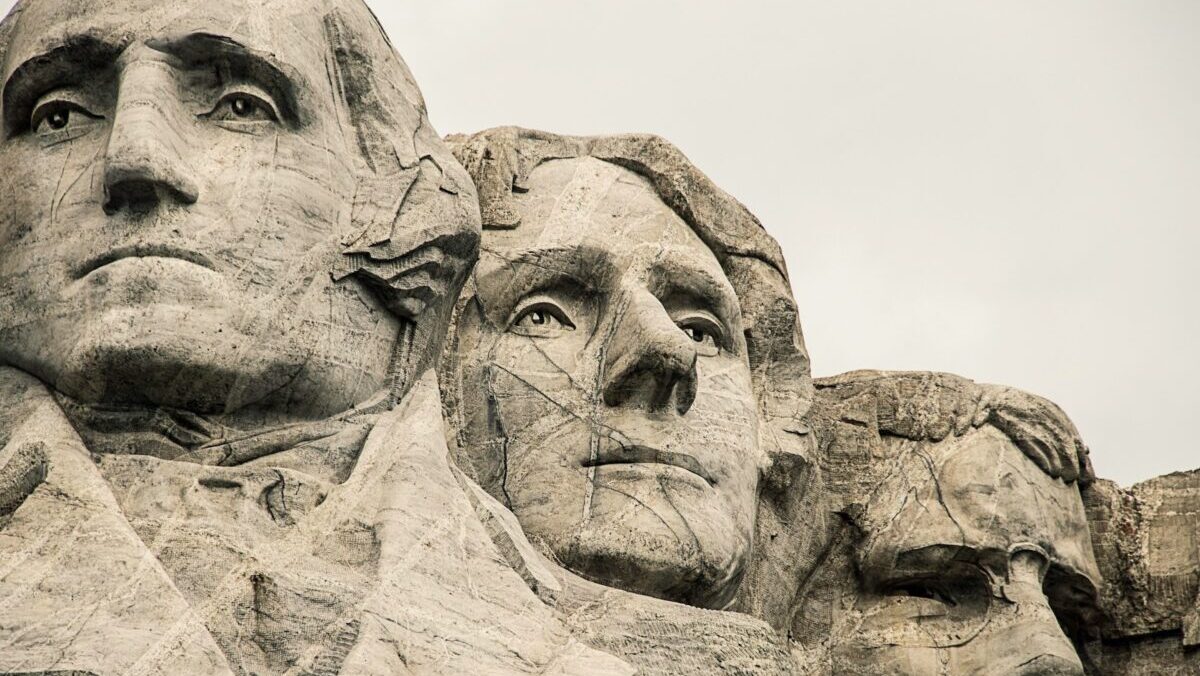
(Unsplash photo)

First person: A ‘colorblind’ constitution

This month marks the 130-year anniversary of one of the most infamous cases in the history of the U.S. Supreme Court. Plessy v. Ferguson (1896) challenged a notorious “Jim Crow” law, one of many that replaced slavery with segregation in the South.

The now nearly universally discredited decision from the Court is worthy of reflection, especially in light of the 250th anniversary of the Declaration of Independence. 

SIGN UP for our weekly Highlights emails.

Homer Plessey was a black man arrested for buying a ticket for a “white” train car. He was arraigned before Judge John Ferguson for defying a Louisiana law that required railroads to provide “equal but separate” cars for people of different races. Plessy argued that the Louisiana law imposed a badge of servitude on him and denied him equal protection under the laws and the exercise of his privileges and immunities as a U.S. citizen. The state of Louisiana argued it was a reasonable exercise of the state’s police powers.  

The case worked its way to the U.S. Supreme Court where, in a 7-1 decision, the Court upheld Louisiana’s law as constitutional. This allowed Louisiana to rely on “the established usages, customs, and traditions of the people.” The decision dealt a crucial blow to efforts for racial equality, validating the “separate but equal” doctrine as constitutional for several decades.  

Lone dissent

The lone dissent came from Justice John Marshall Harlan, an elder who taught in the Presbyterian church until his death, including during his years on the Supreme Court. He was sincere in his Christian faith, even earning a chapter in Cambridge University Press’s volume, “Great Christian Jurists in American History.” An early supporter of slavery and opponent of Abraham Lincoln, Harlan came to see the end of the Civil War and the subsequent amendments to the Constitution as part of God’s divine plan to free the nation from the evil of slavery.  

He referred to the Declaration as “our political Bible,” with its proclamation of equality as proof of America’s moral legitimacy. In Plessy, Harlan provided what is perhaps the most famous dissenting opinion in Supreme Court history: “Our Constitution is color-blind and neither knows nor tolerates classes among citizens.”  

In 1954, in Brown v. Board of Education, the Court overturned the Plessy decision, but in an ironic way. That decision was based on questionable psychological research, which showed that segregation — in that case, school segregation — created a feeling of inferiority in black children. In other words, the Court did not argue that segregation was objectively wrong, but only hurtful.  

Though the outcome is to be celebrated, it is striking, as political scientist Dr. Ed Erler noted, that Harlan’s dissent in Plessy was ignored by the Supreme Court in Brown v. Board. The exact reason why is unclear, but Erler suspected it was to make possible future racial distinctions for benign purposes, such as Affirmative Action and racial quotas.   

Regardless, the Brown v. Board decision was the first time the High Court sidestepped the Constitution and relied on social science research to justify a decision. As such, it is an example of science replacing a “self-evident” truth — in this case, equality. Had the Court relied on Harlan’s dissent, it would have aligned with the Fourteenth Amendment’s guarantee of equal protection and, in a much larger respect, with the principle of equality found in the Declaration of Independence. 

Legacy of Plessy

As we consider the legacy of Plessy today, it is fitting to consider one of the greatest contemporary speeches by a sitting Supreme Court justice. Recently, Justice Clarence Thomas spoke at the University of Texas to celebrate the 250th anniversary of the Declaration. Equality, he said, is from God, and the “the Declaration is, in fact, along with the Gospels, one of the greatest anti-slavery documents in the history of western Civilization.” He also spoke of Plessy v. Ferguson, calling racial segregation “grossly incompatible with our colorblind constitution,” and how Justice Harlan’s dissent demonstrated the “right thing to do.”  

Whenever the permanently true principles of the Declaration have been rejected, there are consequences. Ideas such as Historicism or neo-Darwinian science cannot replace what is true as a foundation for a good and just society. Thus, Thomas said, we must demonstrate courageous devotion to the enduring principles of the Declaration, if the laws of nature and nature’s God are to guide us, and if we are to make it for another 250 years. 


EDITOR’S NOTE — This article was written by John Stonestreet and Andrew Carico and originally published by the Colson Center’s Breakpoint website. 

Share with others:

Facebook
X/Twitter
LinkedIn
Email
Facebook
Twitter
LinkedIn
Email

Latest News

  • Carolyn Fountain named 25th president of national WMU
    Carolyn Fountain named 25th president of national WMU
    June 7, 2026/
    0 Comments
  • New SBC resource helps churches strengthen abuse prevention efforts
    New SBC resource helps churches strengthen abuse prevention efforts
    June 7, 2026/
    0 Comments
  • Fully pursuing Christ ‘hard … but that’s the point,’ Ritchie shares with associational leaders
    Fully pursuing Christ ‘hard … but that’s the point,’ Ritchie shares with associational leaders
    June 7, 2026/
    0 Comments

Sign up for the Highlights

Get all latest content delivered to your email a few times a month.
Email is required Email is not valid
Thanks for your subscription.
Failed to subscribe, please contact admin.

Related Posts

New SBC resource helps churches strengthen abuse prevention efforts

The Fortify Initiative is a free, ready-to-assemble abuse prevention and response training model for Southern Baptist local associations and state/regional conventions.

Fully pursuing Christ ‘hard … but that’s the point,’ Ritchie shares with associational leaders

God’s strength shines through believers who are weak but fully relying on Him, says evangelist and SBC first vice president Daniel Ritchie.

SBCAL names Alabama’s Chris Crain AMS of the Year

The Southern Baptist Conference for Associational Leaders named Alabama’s Chris Crain AMS of the Year during the organization’s annual meeting in Orlando today (June 7).

‘Be ready’: Disaster Relief director urges preparedness

With hurricane season here, one state’s Disaster Relief director said churches and residents must not delay preparations for the next big storm.

Want to receive news highlights throughout the week? Sign up here!

Email is required Email is not valid
Thanks for your subscription.
Failed to subscribe, please contact admin.

About

  • Our Story
  • Our Team
  • Our Partners
  • Advertise and Promote
  • Classifieds
  • Contact us
  • Our Story
  • Our Team
  • Our Partners
  • Advertise and Promote
  • Classifieds
  • Contact us

Explore

  • The Kids Edition
  • State-specific news
  • Archive
  • Opinion pieces
  • Sunday School lessons
  • Persecuted Church
  • Podcasts
  • Videos
  • The Kids Edition
  • State-specific news
  • Archive
  • Opinion pieces
  • Sunday School lessons
  • Persecuted Church
  • Podcasts
  • Videos

Submissions

  • Story suggestions
  • Your Voice/Letter to the Editor
  • Photos / Videos
  • Corrections/other
  • Submission Policy
  • Story suggestions
  • Your Voice/Letter to the Editor
  • Photos / Videos
  • Corrections/other
  • Submission Policy

Subscribe

  • Subscribe
  • Renew subscription
  • Gift a subscription
  • Start a new member subscription
  • Start a new group subscription
  • Hosted Church
  • Manage your group
  • Manage your account
  • Request free trial
  • Subscribe
  • Renew subscription
  • Gift a subscription
  • Start a new member subscription
  • Start a new group subscription
  • Hosted Church
  • Manage your group
  • Manage your account
  • Request free trial
The Baptist Paper
Address:
3310 Independence Dr.
Birmingham, AL 35209
Copyright © 2026 TAB Media Group
  • Privacy/Terms of Use
  • Help
  • FAQ
  • Privacy/Terms of Use
  • Help
  • FAQ

Email:
news@thebaptistpaper.org

About

  • Our Team
  • Advertise and Promote
  • Classifieds
  • Donate
  • Contact us
  • Hosted Church
  • Our Team
  • Advertise and Promote
  • Classifieds
  • Donate
  • Contact us
  • Hosted Church

Explore

  • The Kids Edition
  • Latest News
  • Trending
  • Your State News
  • Persecuted Church
  • Editorials
  • Opinions
  • Podcasts
  • Videos
  • Archive
  • Submit your news
  • The Kids Edition
  • Latest News
  • Trending
  • Your State News
  • Persecuted Church
  • Editorials
  • Opinions
  • Podcasts
  • Videos
  • Archive
  • Submit your news

Subscribe

  • Manage your group
  • Manage your account
  • Subscribe
  • Manage your group
  • Manage your account
  • Subscribe

Our mission is to serve the Church through trustworthy journalism.

As a nonprofit Christian news ministry, we seek to provide grace-filled, trustworthy reporting from a Christian worldview while keeping our content freely accessible online.

Support from readers and ministry partners allows us to continue equipping churches, informing individuals, and providing ministry resources at affordable rates. Would you prayerfully consider supporting this work?

Support Our Ministry

Log Out?

Lost your password?

Log In

Lost your password?

Log in

Become a part of our community!
Forgot your password? Get help
Privacy/Terms of Use

Reset password

Recover your password
A password reset link will be e-mailed to you.
Privacy/Terms of Use
Back to
Login
×
Close Panel