In Silicon Valley, I recently got a glimpse of the future of missions — and it is not what I thought it would be.
During the first week of February, about 50 missionaries, technologists and funders gathered at the historic Hayes Mansion in San Jose, California, in the heart of Silicon Valley. The gathering, hosted by FaithTech and Strategic Resource Group, called itself an “Integration Sprint.” The problem the group hoped to answer is this: “How do we proclaim the gospel in MENA [Middle East and North Africa, a predominantly Muslim region] where direct evangelism may be surveilled, culturally rejected, or unable to be heard because of unprocessed trauma?”
For more stories at your doorstep, subscribe to The Baptist Paper.
SIGN UP for our weekly Highlights emails.
The answer the group produced is simple, but not easy: “We follow Jesus’s pattern of meeting people in their suffering first.” The group planned to meet this goal by building an AI-assisted tool, an app, that “meets people in their time of need through coping skills and biblical lament, prepares the heart to hear the gospel as lament raises questions only Jesus can answer and ushers them into community through human discipleship and digital church.”
‘A bit skeptical’
There is a lot to unpack here, and I will admit that I came into the room a bit skeptical. The gospel is incarnational. It is shared in the context of relationships. Technology promises to unite us, but too often isolates and divides us. Also, the idea of leading our evangelistic efforts with “trauma healing” struck me as — well — a bit wishy-washy. Why not follow the Apostle Paul’s example? He wrote to the church at Corinth: “For I determined not to know anything among you, save Jesus Christ, and him crucified.” (I Cor. 2:2)
I expressed my skepticism to Jordan Stone, SRG’s director of Strategic Initiatives. I asked him directly, “Why lead with trauma healing, and not with the gospel itself?” He helped me understand that in the Middle East and North Africa, violence and conflict are daily realities. War, rape, murder and human slavery have shaped the region. These hard realities disproportionately impact women and children. He helped me remember that the Bible that says to preach “Christ and Him crucified” also says that “true religion” is to “care for widows and orphans in their time of need.” James reminds us: “If a brother or sister is poorly clothed and lacking in daily food, and one of you says to them, ‘Go in peace, be warmed and filled,’ without giving them the things needed for the body, what good is that?” (James 2:15–16).
By the end of the week, I came to see trauma healing as an essential, strategic vessel for carrying the gospel to a region suffering from pain, fear and despair.
But why use technology, especially artificial intelligence? Why not continue to do what has worked for 2,000 years, and that is simply to “go into all the world.”
Another SRG staffer, Justin Murff, who is also an Anglican priest, helped me unpack that question. Murff is responsible for the Digital Church, one of SRG’s initiatives and one of the working groups at the Integration Sprint last week. He said, “I’m an Anglican. I’m an incarnational guy. I believe that in-person church is always preferable. But it is not always possible.”
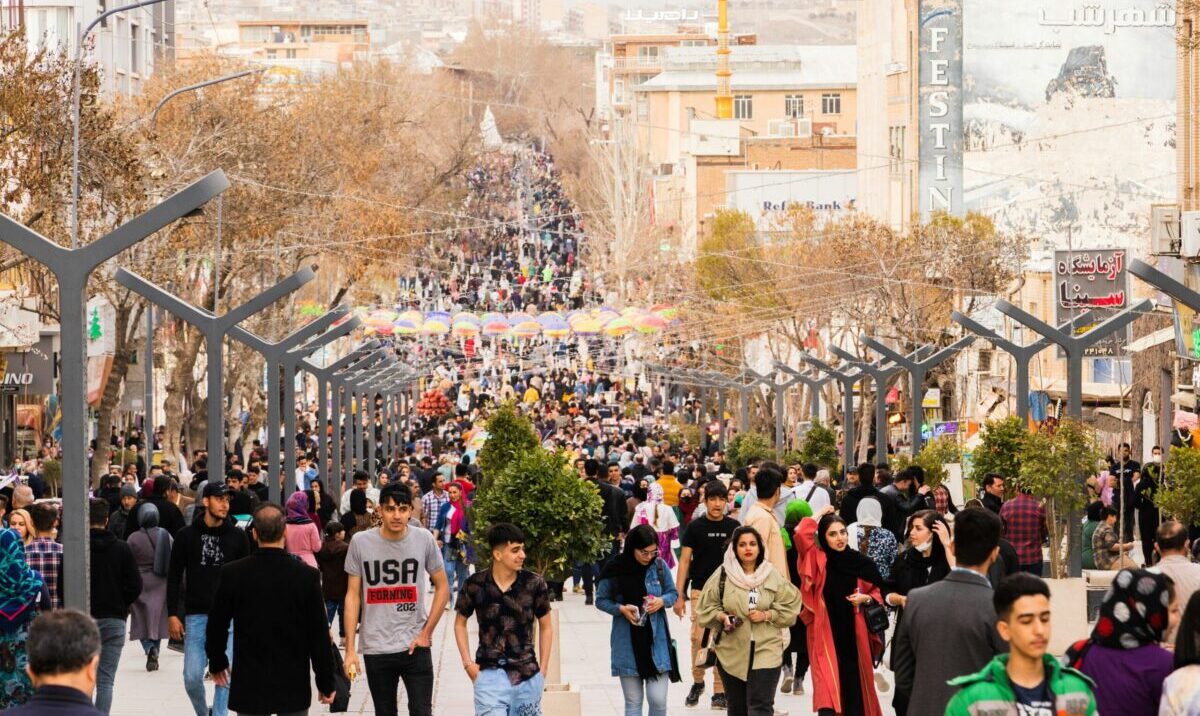
Murff helped me understand that the same MENA countries that have no or only a few underground churches have unfettered access to the internet. Morocco, for example, is less than 1% Christian, but 92% of the population has access to the internet. Morocco is a country with nearly 40 million people, and less than 50 officially recognized Christian churches, and most of these are for Europeans and Americans who live there. Muslims who convert to Christianity face serious persecution, including financial, legal and cultural consequences. In such places, a Digital Church is the only option for Christians who want and need discipleship.
AI and trauma healing
In such an environment, the pairing of AI and trauma healing can be a powerful combination. I was reminded of what I know from my own experience: people will ask questions of an AI that they might be reluctant to ask a real person. Also, they ask questions as they arise and get answers in real time. AI creates what is sometimes called “anonymous intimacy.” You can have a conversation with an AI in the middle of the night, in the middle of the afternoon, in the midst of a crowd or in the midst of a dark night of your own soul.
The goal of this Integration Sprint was to build an app that could be used as a trauma healing tool, a virtual gathering place for the digital church, and a resource for discipleship and evangelism. That is a tall order for a gathering that lasted less than 72 hours. It probably will not surprise you that the group did not quite get there. However, it did get close. It used AI coding tools to create this new tool. The result was a clear plan for the app, a lot of the graphics complete and more than 10,000 lines of code written.
James Kelly, the founder and CEO of FaithTech, facilitated the three-day event. He told me the group didn’t quite get to what he called a “minimally viable product,” but with the follow-up steps they decided upon in the last hours of the meeting, he thought they would get there within weeks, and that the new app could be a game changer for evangelism and discipleship efforts in the Middle East.
Questions remain
The journalist in me remains a bit skeptical. The Luddite in me remembers the unintended consequences of technological innovation released on culture too quickly, without proper safeguards in place. Will digital tools be used by a surveillance state to target Christians? Will interactions with AI Bots become cheap substitutes for real human relationships? These remain unanswered questions.
But the Great Commission Christian in me was energized. Excited. Inspired. As I said at the beginning: “In Silicon Valley last week I got a glimpse of the future.”
I can now add to that: “Bring it on.”
EDITOR’S NOTE — This story was written by Warren Cole Smith and originally published by MinistryWatch. Used with permission.