
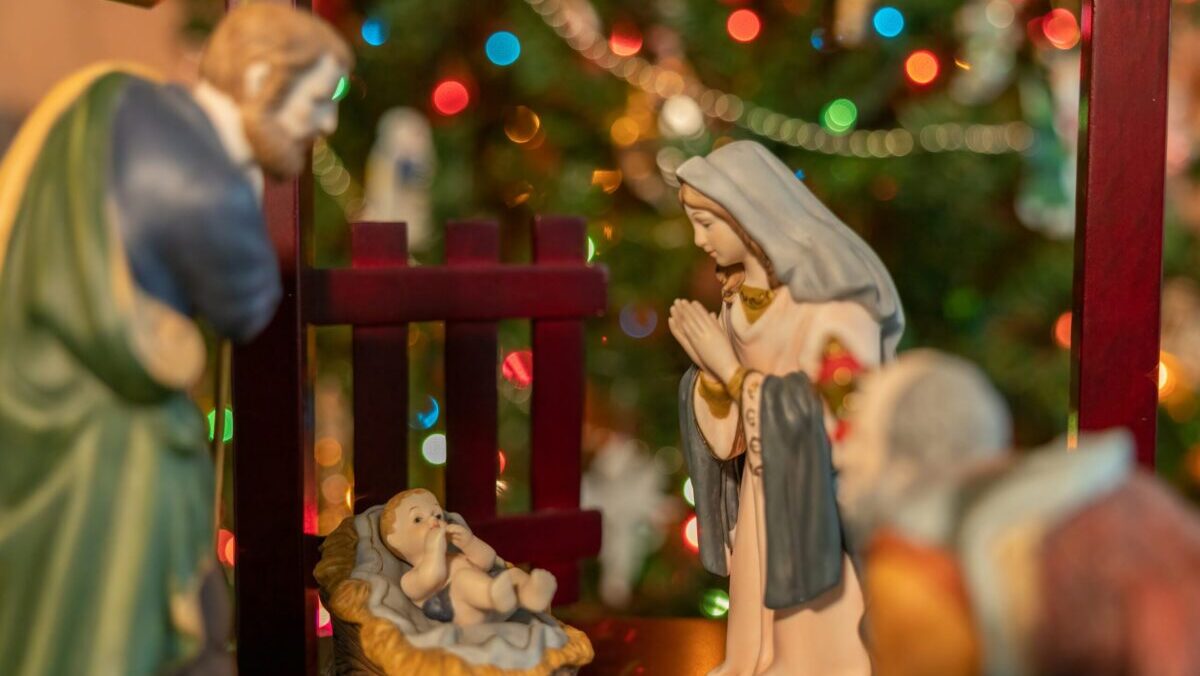
Most have heard the ancient proverb, “Familiarity breeds contempt.” Some trace the pithy premise back to Aesop’s fable of a fox that lived in such proximity to a lion that he was terribly afraid. Over time, though, the interaction between the animals became more casual. Soon, the fox strolled up to the lion, only to be devoured as a result.
No matter the origin, the principle is painfully clear. Constant exposure to anything can dull our sense of awe, gratitude and reverence. Certainly, the lesson applies to the holy realities of our faith. Much to our chagrin, our commitment sometimes grows cold and our enthusiasm tends to wane. Regarding Christmas specifically, genuine Christians would never show open contempt for the nativity, but our familiarity can rob us of its joy.
For more stories at your doorstep, subscribe to The Baptist Paper.
SIGN UP for our weekly Highlights emails.
Think I am overstating our pattern? When the is the last time you pondered the details surrounding Jesus’ birth? Do you still find the gift of God’s Son touching? Or, has the most remarkable story in history become mere wallpaper amidst a busy holiday schedule? Is it possible for us to understand what Christmas is about without being moved by it anymore? Sadly, we are quite capable of singing carols, attending services and hanging decorations while our hearts barely flicker.
A quick survey of the first Christmas, however, paints a dramatically different picture.
The wonder and astonishment of Mary uncovers what I refer to as the Forgotten Gifts of Christmas (Luke 1:46–56). Her perspective is the spiritual antidote to our seasonal boredom.
Admittedly, some have erroneously exalted the mother of our Lord to the place of God. Nowhere does Scripture instruct us to worship Mary or offer her our prayers. She did not live in perpetual virginity nor was she free from original sin. Yet, we ignore this godly woman to our peril. Her example is both inspirational and instructive.
Mary reminds us that worship is a gift. After the annunciation of Gabriel (Luke 1:28–37), Jesus’ mother marveled with worship, exalting the Lord for His grace (Luke 1:46). At this moment, God was bigger to Mary than ever before. His greatness loomed large as she contemplated that her Son would save God’s people from their sins (Luke 1:31). As God in human flesh, Jesus stepped out of eternity into time so that one day He could take us out of time into eternity. Even more, these realities were the messianic fulfillment of promises made to King David long ago (Luke 1:32-33; 2 Sam. 7:12–13).
Additionally, Mary understood that she, too, needed a Savior (Luke 1:47). Realizing her humble state, the teenager from Nazareth knew she had nothing to offer the Lord (Luke 1:48). She could no more save herself by good works than she could have chosen to have a child as a virgin. Thus, Mary became a disciple of Jesus even before she held Him as a mother. We, too, come to Christ empty handed. The only recourse is to admit our need, plead our guilt and revere the Lord with our worship and praise (Luke 1:50).
Mary reminds us that surrender is a gift. By identifying herself as the Lord’s bondslave, Mary highlights her complete submission to the will of God. With the same posture that Jesus would later carry into Gethsemane (Luke 22:39–46), she yields to God’s desire and plan (Luke 1:38). The profundity of her commitment is often lost on us because we remember Mary as a heroine of the faith. Our modern accolades quickly gloss over the upheaval caused by her holy visitation.
At just 12–14 years old, Mary was busy planning her life with Joseph. She was probably giddy over how handsome he was. Likely, her mind was full of dreams about their first home together and how many children they might have. Then, in a dramatic moment marked by the stress of potential misunderstanding, Mary realized that hers was a story that few would believe. How would she explain it to Joseph? What would her family say? What would her friends think? Would the wedding still happen? Would anyone ever believe that she was still a woman of integrity?
Yet, with resolute determination, Mary insisted, “May it be done to me according to your word (Luke 1:38).” Soon, God settled her heart in the home of Elizabeth where John the Baptist leapt in the womb due to the presence of God (Luke 1:39–45). By saying yes to the Lord, Mary experienced her Savior in a personal way.
The same is true for us. For some, surrender means receiving Christ as your Lord and Savior. For others, it will require formalizing membership in the church home of your choice. Yielding to God may result in baptism, service, giving or sharing with others. But nothing unleashes the presence of God in our lives like surrendering ourselves fully to Him.
Mary reminds us that hope is a gift. Often forgotten this time of year is that God promises to make the world right and new. Luke emphasizes these themes by listing a series of role reversals where God scatters the proud, exalts the humble and fills the hungry (Luke 1:51–53). In an age where the ruthless get ahead, the elite lord themselves over others, and the wealthy ignore the needs of the poor, Christmas encourages us that God will have the final say. Tis the season for Him with whom nothing is impossible (Luke 1:37).
The hope of the nativity is not merely for Mary and Joseph, or even for Israel, but all spiritual descendants of Abraham as well (Luke 1:54–55). Because God took care of Abraham and Mary, He will take care of you and me, too, along with all of those who are in Christ Jesus.