
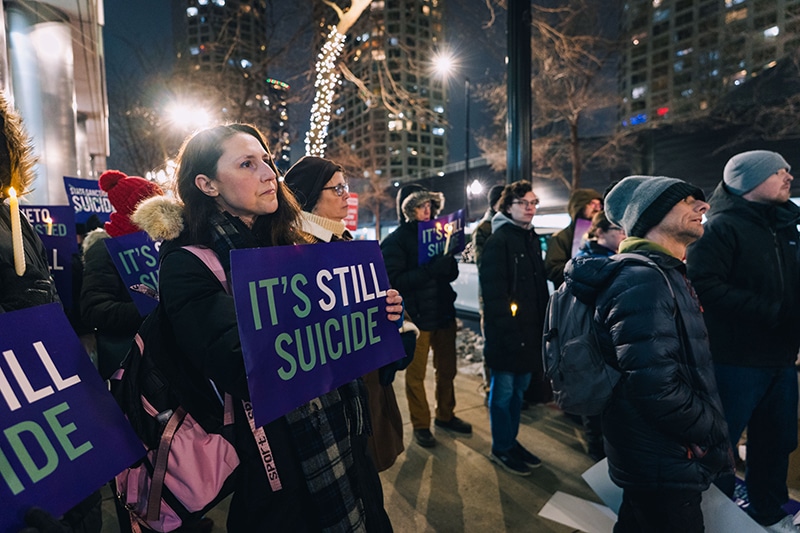
With less than two weeks remaining before Christmas and two days before the start of Hanukkah, there was no big announcement or splashy public signing. Illinois Governor JB Pritzker simply tweeted a few statements from his X account on Dec. 12 in explanation of his reasoning for signing Senate Bill 1950, the End-of-Life Options for Terminally Ill Patients Act.
He tweeted, “Today, Illinois honors their strength and courage by enacting legislation that enables patients faced with debilitating terminal illnesses to make a decision, in consultation with a doctor, that helps them avoid unnecessary pain and suffering at the end of their lives.” The governor signed the bill into law in the face of opposition from several religious, pro-life and patient advocacy groups.
Illinois joins at least 10 other states including California, Hawaii, and Oregon, plus the District of Columbia, in legalizing physician assisted suicide. It also becomes the first state in the Midwest to do so.
To qualify, patients must:
- Be age 18 or older
- Have a terminal illness that will result in death within six months (determined by two physicians.)
- Be informed by their physician of all end-of-life care options, including comfort and palliative care, hospice, and pain control.
- Have the mental capacity, as confirmed by their physician, to make medical decisions.
- Make written and oral requests to receive life-ending medication. Such requests may only be made by the patient, not by their guardian, health care proxy, or through an advance care directive.
Melissa Ortiz, a disability policy expert and cancer survivor with spina bifida, told the Illinois Review; while undergoing chemotherapy in 2021, she was repeatedly directed toward assisted suicide against her wishes.
‘Offered death when I needed care’
During an extremely low period, after having been informed by doctors that her chances for survival were slim, a nurse shared with her about a group that assisted terminally ill patients in dying.
“I was offered death when I needed care,” Ortiz warned. “Pressure was brought to bear, albeit subtly, to choose the drugs so that I would not suffer unduly or be a burden.”
The new law outlines processes and protections to be implemented by the Department of Public Health before going into effect in September 2026.
Proponents claim no physician, health care provider, or pharmacist will be forced to participate and that the law makes it a felony to force anyone to cooperate.
The bill passed the Illinois House in May 2025 by a 63–42 vote and narrowly cleared the Senate in the early morning hours of October 31, 2025, by 30–27 in the fall veto session. It was attached to a “food sanitation” bill.
EDITOR’S NOTE — This story was written by Lisa Misner and originally published by the Illinois Baptist.