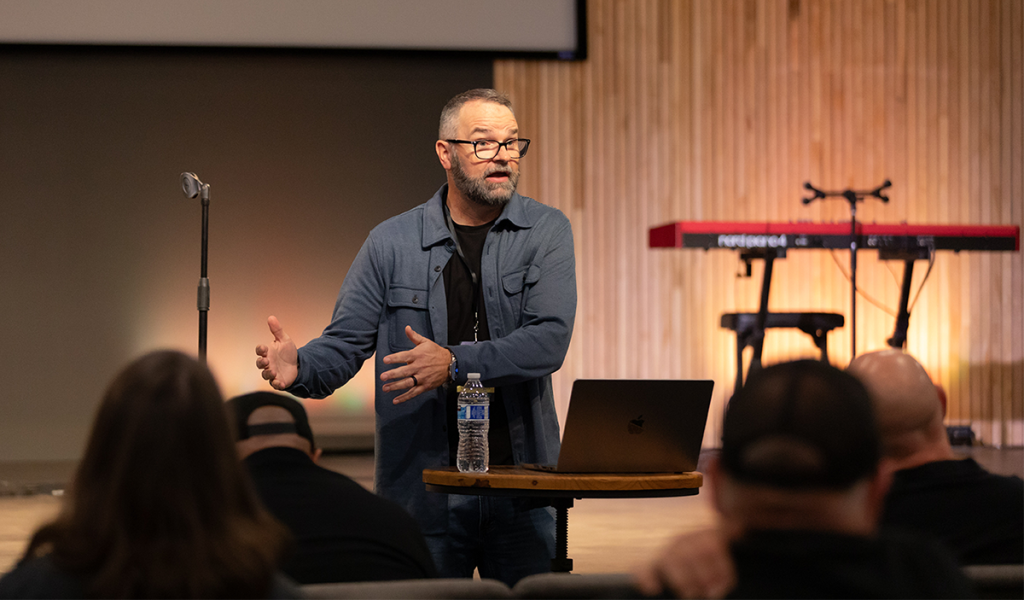
Looking for a new leader? Cory Bramlett, associate pastor at Mountain Ridge Church in Glendale, had some advice on that during the breakout session “What should I be looking for in my ‘next’?” at the Who’s Your Next? Conference, recently hosted by the Arizona Southern Baptist Convention. This article is based on that breakout session.
Don’t ask, “Who is ready to lead?” Instead ask, “Who is God already forming?” God is already forming people around you. You don’t create leaders — God does. You need to notice, nurture and invite them to lead.
For more stories at your doorstep, subscribe to The Baptist Paper.
SIGN UP for our weekly Highlights emails.
Don’t look for a finished leader. God’s pattern for leadership starts with seeing the heart. Look for faithful, available and teachable people. Look for potential over present reality (John 1:42), heart over appearance (1 Samuel 16:7) and faithfulness over finished (1 Timothy 2:2).
Five indicators
Look for these five indicators that God is preparing someone:
1. Faithfulness before fruitfulness: Observe if a person shows up consistently, serves without seeking the spotlight and can be trusted with small things. Faithfulness is quiet and unannounced.
2. Spiritual hunger: Watch if a person is curious about God’s Word, asks good questions, wants to grow and is looking for more of God.
3. Relational gravity: Examine if people open up to this person, listen to what this person has to say, or if this person influences others without trying.
4. Responsiveness to feedback: Note if this person is correctable, learns from mistakes and applies what he/she has been coached on. Teachability is more important than talent.
5. Mission and values alignment: Check if this person cares about the church’s vision, celebrates the wins of others and uses “we” and not “me.”
Potential before polish
Spot potential before polish. Someone with potential could exhibit rough communication, inconsistent confidence and underdeveloped skills.
Discern between red flags and growth edges. Red flags in a person include character issues like pride, tendency to operate in isolation and resistance to the vision. Growth edges are coachable gaps such as inexperience, fear (which can be addressed with encouragement) and uncertainty (which can be resolved by providing clarity and direction). Potential leaders are correctable, coachable and not defensive.
Four-step pathway
Adopt a four-step pathway from noticing a potential leader to inviting them.
1. Name what you see: Tell them, “I see something in you.”
2. Invite, don’t pressure: Ask them, “Would you be open to exploring leadership?”
3. Provide a next step: Invite them to shadow, apprentice or lead a portion of a ministry task.
4. Connect to a pipeline: Don’t just invite them to a task, invite them into a development structure. An invitation without a pathway leads to confusion. A pathway without an invitation leads to stagnation.
Write down the name of at least one person in whom you see the five indicators that God is preparing them (refer to the list above).
Ask yourself, “What would change in my church if I consistently saw people this way?”
You don’t need a better system. You need better eyes and braver invitations.
EDITOR’S NOTE — This story was originally published by the Arizona Mission Network. It is Based on the breakout session “What Should I Be Looking For In My ‘Next’?” at the Who’s Your Next? Conference. This breakout was presented by Cory Bramlett, associate pastor at Mountain Ridge Church in Glendale.