The most important part of the 2026 annual meeting of the Baptist General Association of Virginia is not what happened in Virginia Beach, according to BGAV executive director Wayne Faison.
“The real test of whether we have embraced the ‘heart for the not yet’ will not be measured by how much we enjoyed the worship, how inspired we felt during the messages, or even how many notes we took,” he said. “It will be measured by what changes when we return home. Who will we see differently? What conversations will we have? What person will we invite? … What opportunity will we embrace that we might otherwise have overlooked?”
“The Holy Spirit wants us to remember something: the ‘not yet’ … is a reminder that the mission of God is still unfolding.”
More than ‘a Sunday meeting’
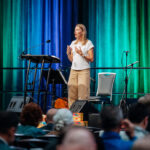
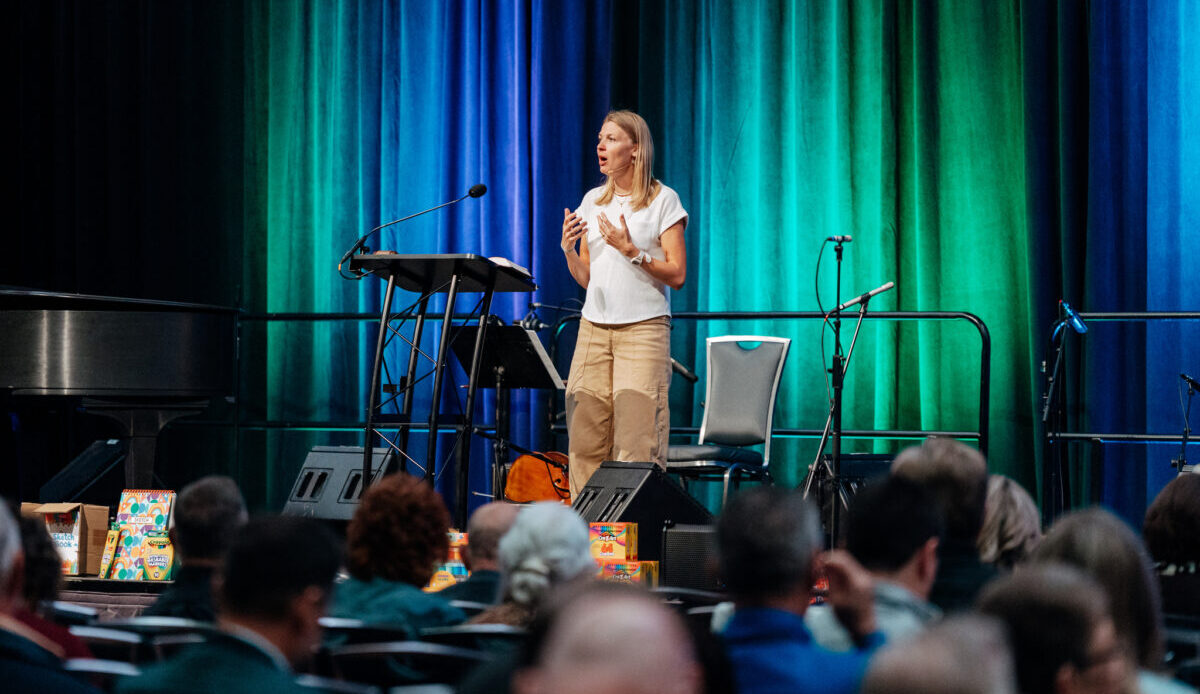
In her final message to those gathered, Miriam Swanson echoed the call for those listening to use their “prayerful imagination” to see what is possible when believers respond in obedience and allow God to work in the “ordinary” of their lives.
“The Church isn’t a Sunday meeting,” she said. “The Church is scattered and sent all over the city, all over our lives, every day of the week.”
Drawing on the 2026 annual meeting’s Scripture theme in Acts 17:6, Swanson highlighted Jason, an “ordinary” believer whose home became the site of a riot when Jewish officials sought out the other Christ followers he was hosting.
“Through the way Jason embodies the gospel in his everyday life, his everyday welcome, with his everyday stuff that he’s got before him — a living room — he declares, ‘There is another king, one called Jesus.’ And that absolutely throws off the whole status quo.”
‘Dangerous hospitality’ still matters
This “dangerous hospitality” still matters today, Swanson said, challenging those gathered to consider how their homes can become places where those outside the family of God are welcomed and where the presence of Jesus can be encountered.
Swanson, national director of Fusion USA, an organization that seeks to engage college students and young adults across campuses and communities with the gospel, said she has seen this in her ministry.
She shared stories of inviting college students to her home, often welcoming those who came from radically different backgrounds than typical “church kids.” Without such intentional inclusion, she suggested, churches run the risk of being “a cozy little holy club” for those who already know Christ.”
“Don’t make college ministry in your church a glorified youth group,” she urged. “Don’t let those kids stay kids, sheltered from being salt and light where it’s needed the most.”
The goal of reaching out to people of all ages is not simply to get them to attend Sunday worship, Swanson explained, but rather to build relationships and find those “persons of peace” whose hearts are open to hearing the gospel.
‘Be awkward’
Christmas is about to come, Swanson said, encouraging people to use the holiday as an excuse to say hello to their neighbors and invite them to gather.
“Be awkward about it,” she urged, but “do whatever it takes.”
“We’re going to go home,” she said. “We can either choose to click straight back into the patterns and rhythms we always have done … or be intentional about cultivating the Kingdom seeds that have been planted, the ideas that are stirring in you.”
“You can choose to walk out of here differently, almost thinking ‘Now, not yet. Now, not yet. Jesus, … where can I step into your not yet of the Kingdom? You can literally think about your feet having purpose as you walk, in faith and obedience, in the now and the not yet,” Swanson said.