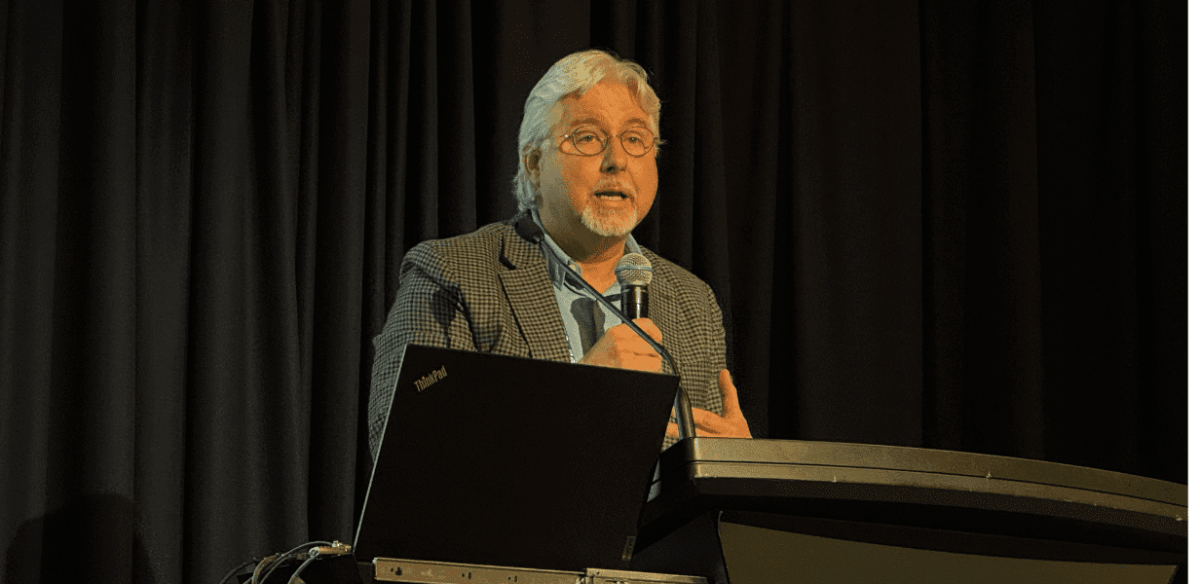
Bruce Webb, pastor of The Woodlands First Baptist Church of Woodlands, Texas, recounted the history of Baptist advocacy for freedom of religion during a breakout session at the Baptist World Congress focused on the persecution of Christians.
Webb started with Thomas Helwys and John Smyth becoming the first Baptists in direct response to the lack of complete religious freedom in England.
He traced Baptist championing of religious freedom through the American colonies, noting persecution of dissenting Christians by the official state churches — during that period.
For more stories at your doorstep, subscribe to The Baptist Paper.
SIGN UP for our weekly Highlights emails that hit your inbox on Monday, Wednesday and Friday.
“Using political power to achieve spiritual gains … is always short-sighted,” Webb said, alluding to Christian nationalism.
“If we give Congress or any political leader the power to give Christianity an advantage, then we also give them the power to remove it and grant that advantage to another ideology we oppose.”
“Baptist Christians have historically believed, if put on equal footing, Christianity will win because it is true,” Webb continued.
“We have never asked for an advantage, have never supported coercion, but have passionately advocated for the freedom to worship, serve God and share the good news of Jesus Christ with everyone everywhere.”
Samson Aderinto Adedokun, pastor of New Dawn Baptist Church in Lagos, Nigeria, described the situation for Christians in his country. He and his family have experienced religious persecution firsthand by what he called “Islamic fundamentalists.”
Adedokun described the positive results of persecution. Persecution scatters the church, but for a purpose.
“When you cannot escape the fire, carry the flame where you land,” he said.
Persecutors also need God’s love, Adedokun said. So, persecuted Christians need to act in love. This love can be demonstrated in kindness toward persecutors. “Your kindness may be someone’s miracle,” he said.
“Persecution is temporary. Kingdom joy is permanent,” Adedokun concluded. “Joy flows from obedience [to God], not comfort.”
Lessons for churches from areas of conflict
Igor Bandura, vice president for international affairs with the Union of Ukrainian Baptists, participated in a breakout session focused on lessons learned from churches facing war, violence and terror.
Bandura began by pointing to Psalm 46:1—“God is our refuge and strength, an ever-present help in trouble.”
“This promise anchors us,” he said.
Bandura shared four lessons—“practical wisdom for any church facing trials”—Ukrainian Baptists have learned in the current war.
- “Plan for the worst. Act in faith.”
Even though their prayers expecting God to stop the war were not answered, “not one pastor said God failed us,” Bandura said. “War became our call to serve.”
- “Pace yourselves for the long haul.”
Likening war to a marathon, Bandura said: “The finish line is unknown. … Be sure you’re not alone. … Never face trials alone.”
- “Adapt your theology to war’s challenges.”
Bandura made clear he was not speaking of core theology, but theology of concepts like peace and evil.
“Peace-time theology often crumbles in war. … Theology written in a soft chair does not work because life is bloody,” he said.
“Evil is very intentional,” Bandura added. “Propaganda deceives even good Christians. … War demands sober realism. … A deceived church cannot stand.”
- “Community preserves mental and spiritual health.”
Knowing their No. 1 plan would be to serve their community when Russia launched its full-scale invasion of Ukraine, Ukrainian Baptists provided water, generated electricity and offered church basements as bomb shelters.
To maintain their mental and spiritual health and build resilience, “we laugh a lot,” cry together and pray together, Bandura said.
EDITOR’S NOTE — This story was written by Eric Black and originally published by Baptist Standard.