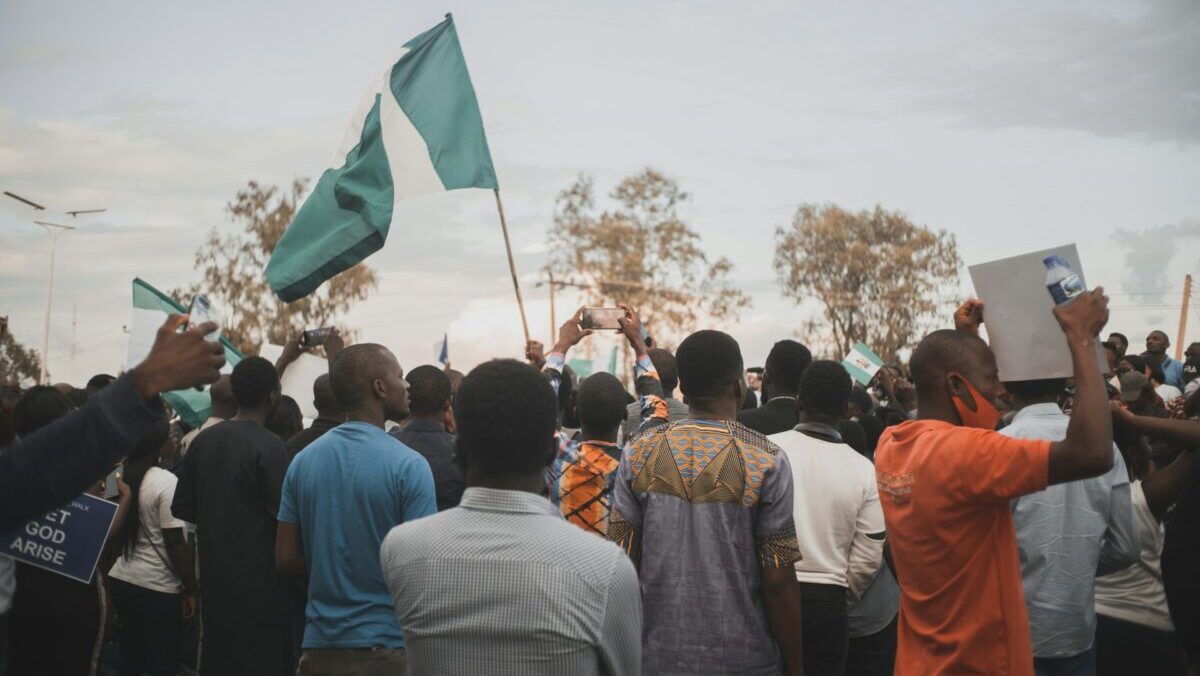
A high-ranking Nigerian official dismissed reports by international human rights organizations about widespread violence against Christians in his country as “not supported by the facts on the ground,” but some Nigerian Christian leaders disagreed.
For more stories at your doorstep, subscribe to The Baptist Paper.
SIGN UP for our weekly Highlights emails.
Past and present members of the U.S. Commission on International Religious Freedom — along with multiple human rights groups — have called Nigeria “the most dangerous country in the world for Christians.”
However, in an Oct. 6 interview with the Baptist Standard via Zoom, Mohammed Idris Malagi, minister of information and national orientation for Nigeria, insisted Christians are not targeted in his country — except by “violent extremists,” whom the government opposes.
“It is sad that this has been characterized as a religious conflict. We don’t believe that it is. It never has been a religious conflict. It actually is an extremist conflict,” he said.
Disputes accuracy of reported numbers
Malagi dismissed as inaccurate a report by the International Society for Civil Liberties and Rule of Law that in the first seven months of this year 7,087 Christians were killed in Nigeria and 7,800 Christians were abducted.
Based on the information it accumulated from varied sources, the group reported 30 Christians a day killed and 35 a day kidnapped during a 220-day period.
“The statistics you have reeled out are not supported by facts on the ground,” Malagi said. “Yes, we have to understand there actually is violence in Nigeria perpetrated by some extremists, targeted at both Muslims and Christians in our country. Nigeria strongly condemns that and fights that with all its available resources.”
Malagi denied that more than 18,000 churches have been burned in Nigeria since 2009, as multiple sources reported.
‘Making sure attacks like this don’t happen again’
Likewise, he dismissed as incorrect a report by Amnesty International that — in the two years since Nigeria’s president assumed his office — 10,217 individuals have been killed in Benue, Edo, Katsina, Kebbi, Plateau, Sokoto and Zamfara States, with more than half of those killings (6,896) occurring in Benue State.
“We have seen some of these numbers flying around here and there, including the ones from Amnesty International, but let me say we still dispute these numbers,” he said.
When asked if the government had a report of its own, documenting when and where violence is occurring and to what extent it is happening, he said it’s a complicated situation, and reporting is “a work in progress.”
“What’s more important to us is making sure that attacks like this do not happen again,” he said. “We’re calling on our international partners to join hands with us to ensure that Nigeria returns to normalcy.”
‘Numbers may differ, but the pain is real’
Joseph John Hayab, chairman of the Christian Association of Nigeria in the northern states and Federal Capitol Territory, said any discussion of religious persecution in Nigeria “must be approached with honesty, empathy and a commitment to truth.”
“While there may be variations in the statistics presented by different organizations, the reality remains that many Christians in parts of the country continue to face harassment, denial of opportunities, and targeted attacks because of their faith. These experiences cannot be ignored, even as we continue to hope and work for a more just and peaceful nation,” Hayab said.
The government should acknowledge the reality of suffering, he emphasized.
EDITOR’S NOTE — This story was written by Ken Camp and originally published by the Baptist Standard.