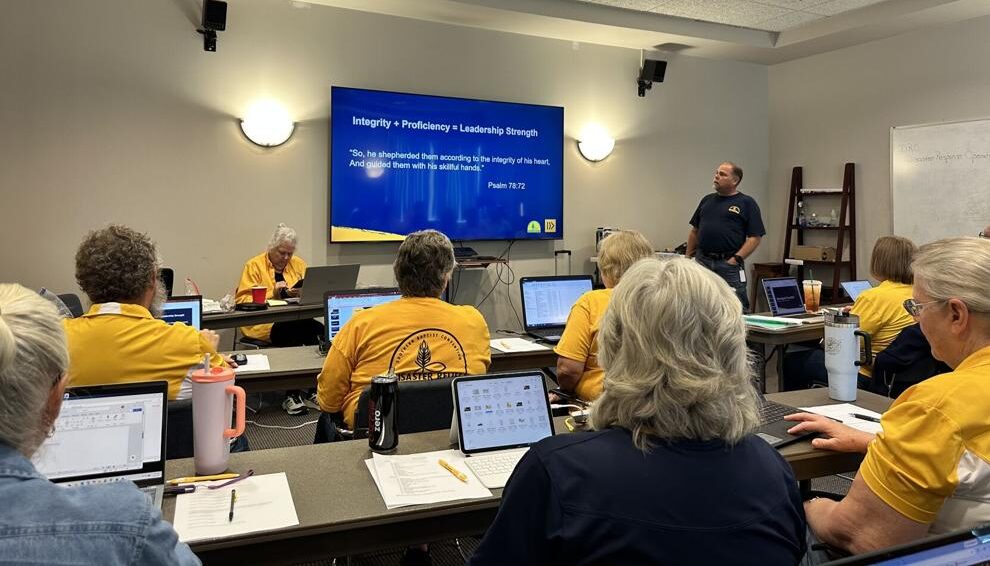
Key Southern Baptist Disaster Relief volunteers from across the country gathered in Louisville, Kentucky, recently to be trained to help effectively respond to national emergencies.
During major disasters, the Federal Emergency Management Agency opens a national disaster response operations center. Representatives from various organizations gather there to coordinate response efforts, and Southern Baptist Disaster Relief is the only faith-based agency with a seat at the table.
RELATED: Check out more stories on Baptist Disaster Relief.
The training hosted by Kentucky Baptist Disaster Relief was designed to help volunteers coordinate with and communicate to FEMA and the other relief agencies to make the emergency response more efficient.
“The key is communication,” said David Fox with South Carolina Disaster Relief. “In any disaster response, the goal is to be that communication link so we can serve affected communities efficiently and quickly.
“They need to identify national partners who can provide resources and then communicate needs back to state leaders. For example, if FEMA or the Red Cross says they need kitchens set up in certain areas, the representative communicates that to state directors and coordinates whether those needs can be met. It’s about creating a clear, two-way flow of information.”
Karen Smith of Kentucky Baptist Disaster Relief says Southern Baptists bring a lot of experience to the table.
“We’re giving them tools — resources we’ve developed over time,” she said. “Historically, people going to Washington have only focused on feeding operations, but disaster relief includes much more — chainsaw crews, recovery teams, and other services. They need to be familiar with all of it.”
Preparing for the worst
Two dozen volunteers attended the training. Smith said when Hurricane Helene hit the Southeastern United States in 2024, Southern Baptists realized the importance of having more people prepared to help coordinate national disaster response efforts.
“Over the years, many of the people who have filled that role have grown older or are no longer physically able to go,” she said. “After Hurricane Helene, we realized we needed a larger pool of people to represent us.”
Another training is scheduled for Oklahoma later this summer.
“The goal is to ensure we’re meeting needs, while also making sure our on-the-ground assets are reinforced with food, supplies, and other resources so operations run smoothly,” said Fox.
EDITOR’S NOTE — This story was written by Lawrence Smith and originally published by Kentucky Today.