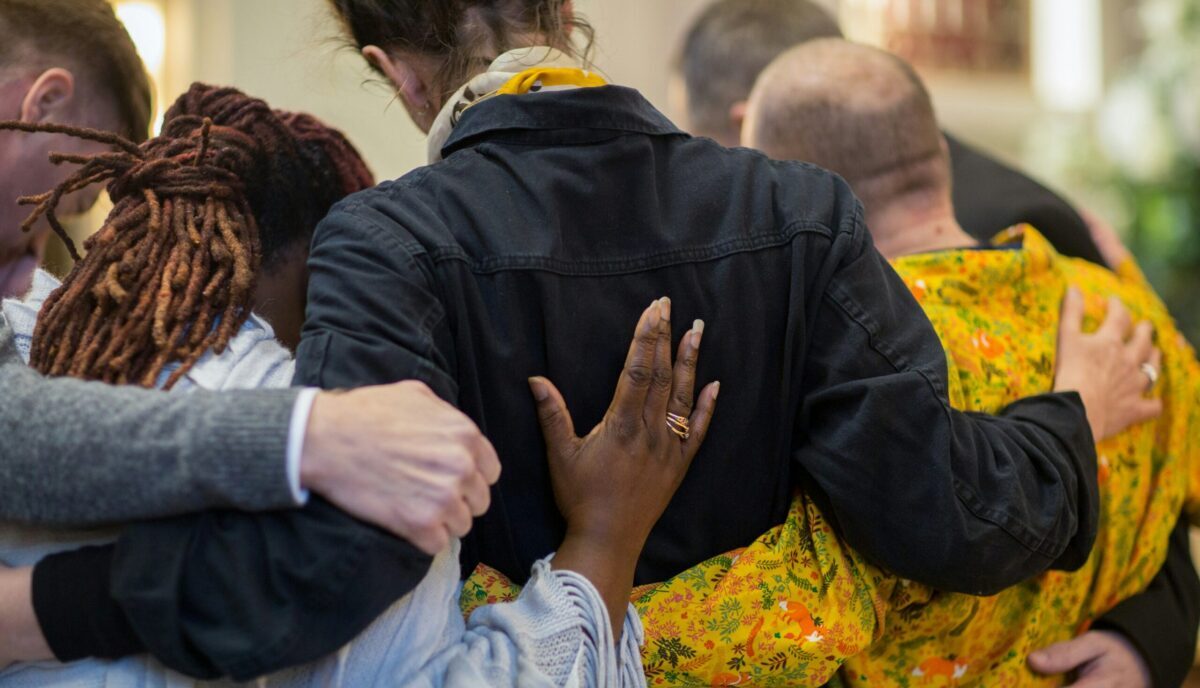
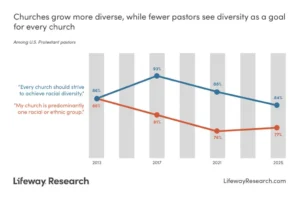
Over the past decade, churchgoers are more likely to see someone of a different ethnicity in their congregation but less likely to hear about that racial diversity from the pulpit.
A Lifeway Research study of U.S. Protestant pastors finds churches have seemingly grown more diverse, while pastors have grown less likely to see that diversity as a goal and preach about racial reconciliation.
“American congregations have a long history of being comprised of almost entirely one ethnicity. The reasons reflect both social tendencies and historical factors such as repercussions from slavery, waves of immigration from specific regions and denominations that also immigrated to the U.S.,” said Scott McConnell, executive director of Lifeway Research.
“While the majority of new churches seek to reach people from multiple ethnicities or cultures, most fall short of sociologists’ multi-ethnic threshold, which is when the largest ethnic group does not exceed 80%.”
Diversity in the pews
Currently, around 3 in 4 pastors (77%) say their church is predominantly one racial or ethnic group, including 50% who strongly agree. More than 1 in 5 (22%) disagree, and 1% aren’t sure.
That percentage is near recent levels but part of an overall downward trend, as more churches seemingly have become diverse. In 2013, 86% said their church had one primary racial group, including 64% who strongly agreed. That fell to 81% in 2017, with 53% strongly agreeing. The year 2021 saw another decline, down to 76%, including 55% who strongly agree. The most recent numbers fall in between 2017 and 2021 levels.
“Churches have slowly reflected changes in the U.S. population, but many are decades behind shifts in the size of ethnic groups in their communities,” said McConnell.
Full story.
EDITOR’S NOTE — This story was written by Aaron Earls and originally published by Lifeway.