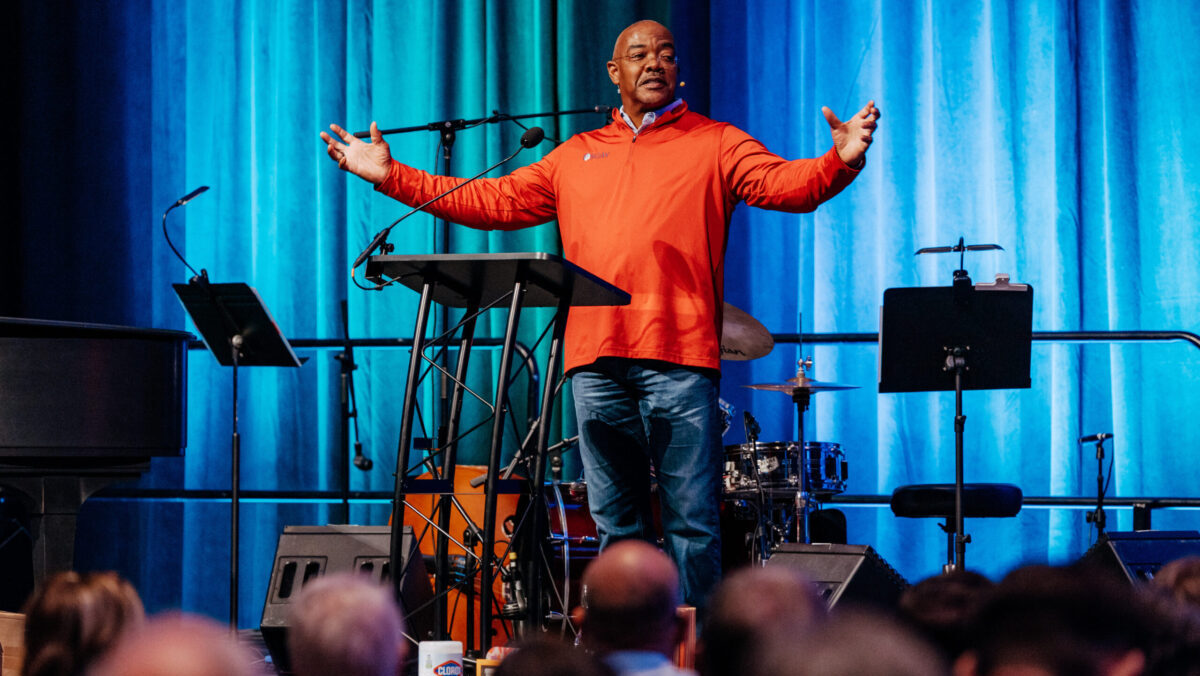
Dima Schmidt’s strongest language is German, but God sent him to start a Russian-speaking church anyway.
“My German was the best language for me,” Schmidt said. “But the Lord said, no, you go and serve with your Russian.”
Schmidt, pastor of Evangelical Free Church of Leverkusen, was born in Kazakhstan to an ethnic German family and moved to Germany at 8. He admits Russian is not his strongest language. Yet his church’s Russian-language services now draw more people than its German ones.
“We have now the Russian-language services bigger than the German services,” he said.
Schmidt has led the church since 2017. He studied at Bonn Bible Seminary and graduated in 2025 from Southwestern Baptist Theological Seminary in Fort Worth, Texas.
His congregation shows how Russian- and Ukrainian-speaking churches are driving church planting in Germany, said Russell Woodbridge, an International Mission Board missionary in Cologne. Many of their members are ethnic Germans.
Evangelical Free Church in Cologne planted the Leverkusen church in 2016. It has planted 10 churches in all, and seven are less than 3 years old. Those seven draw a combined 400 people on Sunday mornings and have baptized 50 people since they opened, Woodbridge said. He called the plants “fairly well” established and the trend “a positive movement in church planting.”
Strength in partnership
Woodbridge wants Tennessee Baptist churches to join that movement. Both the Cologne church and the seminary aim to connect established Tennessee congregations with German church plants.
“We are trying to develop one-to-one church partnerships,” he said.
Most plants do not need money, Woodbridge said. They need prayer, encouragement, and discipleship.
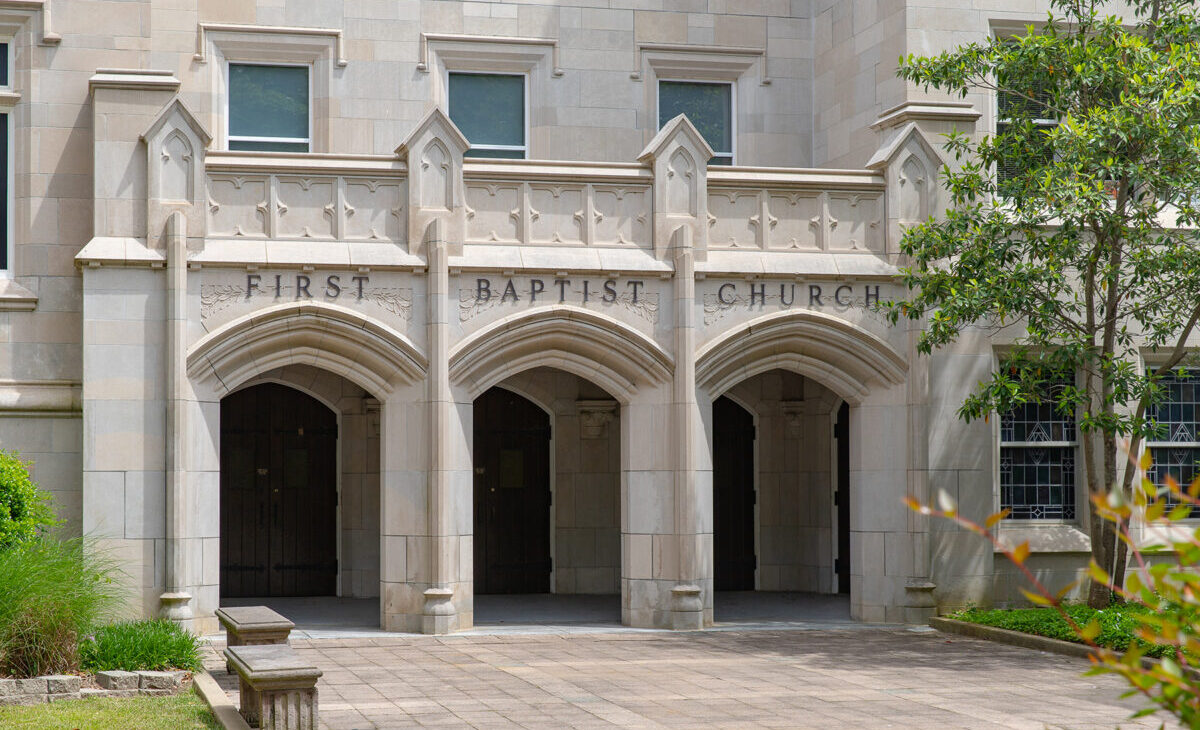
First Baptist Church Hendersonville shows what that looks like. Senior pastor Bruce Chesser believes you can’t outgive God, and that conviction drives his church’s support of Almaz Baptist Church in Gummersbach, a Ukrainian refugee congregation.
Nickolai Skopych, his wife, Kati, and their children, Nikol and Martin, moved to Germany in 2022. Russia invaded Ukraine while they were there, and the family faced a choice: become refugees, immigrants or missionaries. They knew God had sent them as missionaries.
In April 2025, First Baptist Hendersonville partnered with Almaz and bought a building in Gummersbach. Church members have traveled to Germany monthly to renovate it. When finished, the Almaz Center will house worship services and train pastors and leaders for the Ukrainian Missionary Movement.
Schmidt said that kind of support matters because the work is exhausting. He leads more Russian services than German ones, week after week, and he also works as a social worker, visiting broken families.
“It was a very hard time because I was very tired,” he said, laughing. “And today I’m also tired.”
Often, he said, he lacks the time and energy to serve as he feels called to in his heart.
Layers of identity
More than 900,000 ethnic Germans moved from Kazakhstan to Germany after the Soviet Union collapsed in 1991, according to the research article “History of German Diaspora in Kazakhstan in the Context of Migration System.” Schmidt’s family was among them.
“We are Germans who lived in Kazakhstan,” he said.
Schmidt did not grow up in a Christian home. He came to faith at 22. About 18 years ago, his pastor gave him an assignment: “Go and start the Russian community.”
He wanted that community to reach beyond the pews. “Not only in the churches, not only with good clothes, but on the streets, under the bridges, to the lost people,” he said.
Russia’s 2022 invasion of Ukraine brought a new group to his church. Ukrainians now make up about 60% of the youth group, Schmidt said.
Language makes the Russian-speaking church a natural home. Many Ukrainians understand Russian, Woodbridge said, but Russians often cannot understand Ukrainian. Decades of Soviet-era Russification left Russian widely spoken in Ukraine.
“Ukrainian brothers come to believe in the Lord, start to serve, start to learn to serve,” he said. “We see that the gospel has the power to unite all nations.”
The Tennessee Men’s Chorale met some of these believers during its mission trip between Sept. 27 and Oct. 6. The group visited the Leverkusen church and sang “The Blessing” in Ukrainian at other congregations, including Almaz.
“Singing ‘The Blessing’ was a powerful witness for them,” said Wayne Causey, who conducted the chorale. He and his wife, Carrie, served as missionaries in Ukraine five times beginning in 1998, so the trip held special meaning, he said.
Schmidt hopes the partnerships will help magnify Christ across the churches and the country.
“The reason I am sitting here and sharing my testimony is because of Him,” he said, “not because of Dima.”
EDITOR’S NOTE — This story was written by Zoë Watkins and originally published by the Baptist and Reflector.