Ranchers in Nebraska are receiving much-needed hay after wildfires burned large areas of pastureland, leaving many struggling to feed their cattle.
The wildfires, including one of the largest in the state’s history, caused widespread damage and created urgent demand for livestock feed as ranchers began recovery efforts.
Arkansas Baptist Disaster Relief recently partnered with Tyson Foods to help coordinate a response to source and transport hay to affected areas.
Tyson Foods’ disaster relief team monitors natural disasters to identify where the company’s resources can provide support. In wildfire situations, that often includes supplying feed for cattle, a critical need for ranchers.
‘Passion for helping’
“We have many team members with a passion for helping others, whether that is feeding people, sending protein to food banks that support communities in times of crisis or bringing hay to take care of cattle after wildfires,” said Michelle Mullins, director of operations, food loss and waste at Tyson Foods.
When the need was identified, Tyson’s disaster relief and Scranton, Arkansas, team was “eager to help and quickly stepped up, bringing an all‑hands‑on‑deck attitude and a genuine willingness to support ranchers impacted by the fires.”
Mullins connected with ABDR Director Randy Garrett, who then contacted Joe Walden, pastor of Oak Grove Baptist Church in Van Buren, to help secure hay.
Having recently seen the wildfires in Texas and Oklahoma, Walden said a church member had previously offered to provide hay if a need arose. “So, when I got the call, I knew we had some available,” he said.
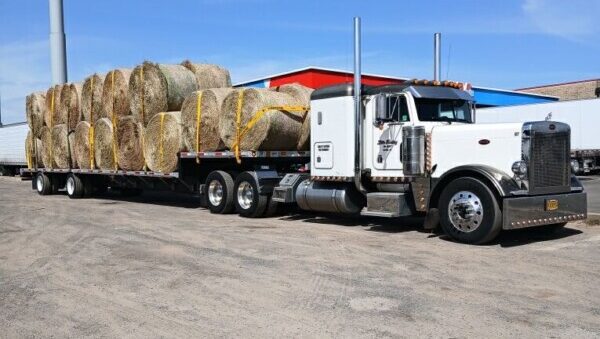
Walden coordinated the donation while Mullins worked with Tyson team members, including logistics coordinator Shelly Turner, to arrange transportation. Tyson’s Scranton, Arkansas, fleet dispatched trucks and drivers to move the hay.
The first load was picked up the day after arrangements were made. A second load followed two days later after additional need was confirmed.
Each load included about 30 large round bales of hay suitable for feeding cattle affected by the fires. The hay was delivered to Oshkosh, Nebraska.
Significant need
Walden said the need remains significant. He recalled a truck driver describing a rancher with about 1,800 head of cattle who was considering reducing the herd drastically because of limited feed.
“At this point, any little bit helps,” Walden said.
EDITOR’S NOTE — This story was written by Mary Alford and originally published by the Arkansas Baptist News.