A team from The Baptist Paper, a sister publication to The Alabama Baptist and part of TAB Media Group, continues its review of the audio files from the 2009–2010 meetings of the Great Commission Resurgence Task Force.
They’ve made it through the first two gatherings of the task force and are currently working through the third meeting.
For more stories at your doorstep, subscribe to The Baptist Paper.
SIGN UP for our weekly Highlights emails that hit your inbox on Monday, Wednesday and Friday.
Highlights from first gathering
A few highlights from the first meeting, which took place Aug.11–12, 2009, in Atlanta include:
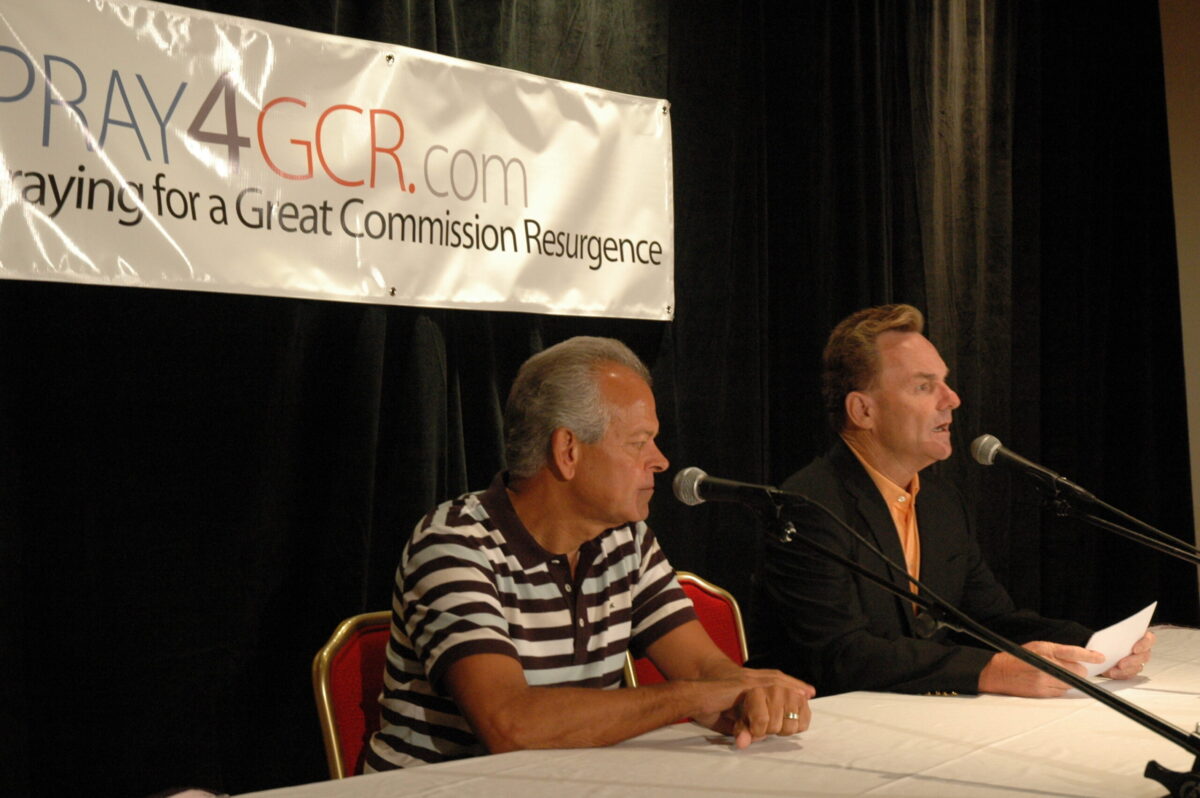
•Ronnie Floyd, chair of the task force and then pastor of Cross Church in Springdale, Arkansas, described the importance of preserving the notes from the meetings that were about to take place, at least the audio files.
“This is highly confidential stuff. We can’t email about it, tweet about it … this is really big stuff,” he shared with the group. “What we will do before we leave this meeting, we will take a vote (about) how long we are going to preserve this. … This does not prohibit anything you say because nobody’s going to hear it for 10 years at least.”
Floyd also focused on the importance of prayer before getting started.
“Any significant moment we’ve ever had in our lives has happened because somewhere we’ve gotten with God and somewhere God has spoken into our lives. … The ultimate purpose of our group is to speak the word of God around the world and to win the nations.
“Well, ladies and gentlemen, that’s not going to happen until we pray. And I want us today as an act of humility, an act of honor to our Lord Jesus. … I want us to go straight there before we even introduce ourselves to each other. Because we need the God of heaven, I’m telling you we need the God of heaven, more than we even know we need the God of heaven today. … Today I want us to … agree with God together in prayer.”
‘Spin’ and priorities
•Johnny Hunt, then-president of the Southern Baptist Convention who appointed the task force and sat on it as an ex-officio member, shared his concerns about how often he heard promotional items from the SBC level indicating “how good we are doing.”
“It seemed like we had the capacity to take a very bad year and spin it and make it sound good,” Hunt said. “I just cannot for the life of me say that if 80% of our churches are plateaued or declining, we’ve had a good year. When you can stand and say we baptized more people in 1950 with 6 million and only God knows how much less money and technology, we can’t even go there. How under heaven can we rejoice?”
Hunt also shared his frustration over how Cooperative Program giving seemed to be more important than focusing on the Great Commission.
“When the … major thing (for state papers to print) is not if any of us love Jesus, if we win souls, if we go overseas but what they print is … our CP giving. We have gotten to the point like it or not where the test of fellowship for this denomination is the percentage that you put beside CP,” he said. “It doesn’t matter if we are in a church that has declined in its budget for eight years in a row, just so you gave 10% of whatever is declining.”
•Also sharing with the group were Thom Rainer, then president of Lifeway Christian Resources; Danny Akin, president of Southeastern Seminary in Wake Forest, North Carolina; Al Mohler, president of Southern Seminary in Louisville, Kentucky; Harry Lewis, then with NAMB; and Barry McCarty, longtime SBC parliamentarian.
Their topics covered a wide range of historical, data-driven and contextual topics. They also answered questions and addressed comments from the group.
One comment focused on Southern Baptists’ seemingly avoidance of helping the poor.
Mohler responded, “There’s a huge guilt on the SBC for translating the gospel into white bread, middle class Protestantism. We have done that overtly and covertly. We would insinuate if you love Jesus you will dress like us, live like us, make these decisions. … We expect of our children a middle class identity more often than we expect a gospel identity.
“Our priorities are just all wrong,” Mohler added. “If our priorities were right, then we wouldn’t have to say, ‘Let’s go minister to the poor. We would find ourselves doing that.’
“I’m as guilty as anyone … here with my fountain pen and Apple computer,” he said. “We are so socially stratified (but) gospel churches find people for Jesus.”
Highlights from second session
A few highlights from the second meeting, which took place Aug. 26–27, 2009, in Arkansas include:
•Jerry Rankin, then president of the International Mission Board, gave a report on lostness and shared thoughts on how Southern Baptists could have a greater impact on reaching a lost world. The vision presented was that by the end of 2010, the IMB would have been unable to identify a people group that doesn’t have access to the gospel. “That doesn’t mean they have been evangelized, certainly a major part of the task, but at least they have access to the gospel,” he said.
Rankin noted the importance of more churches in the U.S. being challenged to help reach the ends of the earth, not just their communities, state and nation. It’s not just about evangelism and baptism numbers. It’s about the Great Commission, he said.
“Most Southern Baptists think our missions task is populating heaven with as many people as we can win to the Lord. We could redeploy our missionaries into seven countries — Mexico, Brazil, Nigeria, Kenya, Philippines, Korea and India and double the number of baptisms,” Rankin said. “We could be reporting 2 million baptisms a year. Would that fulfill the Great Commission? It would leave 10,000 people groups, not even hearing the gospel. That’s not our missions task.”
He explained that doing missions requires evangelism, but strictly doing evangelism isn’t the Great Commission. The Great Commission is about getting the gospel to those who have never heard.
Dependency and legacy structure
Rankin also touched on how many pioneer states are too dependent on “NAMB subsidies for their survival and existence.” He addressed how the IMB had to let conventions overseas be more independent and how “they have stepped up and grown. We’re partnering with them and helping train them but not doing it for them.”
He added that “many of our pioneer state conventions … haven’t made one step toward self-suffiency” and an “inherent weakness” has been built into the SBC. As a result, this creates an “enormous price tag.”
“Why do we not have enough money to send missionaries to the peoples and fulfill the Great Commission? We have built into a legacy structure that is dependent on subsidy.”
New presentations, programs and promotions aren’t going to “cut it until the grass-roots church members are sharing their faith,” he said.
Rankin also said churches need to have more control of where their Cooperative Program support goes. He went on to say the SBC is not being led by leaders but by those who first set up the structure and wrote the bylaws. They are “calling the shots.”
Churches need to be able to take more ownership and need an “avenue of strategic allocation.” Right now churches are “too locked in,” Rankin said, noting that individual churches need to be able to make more decisions on where their funding goes.
‘Follow the money’
•Mohler gave a “follow the money” report to committee members addressing cooperative agreements between NAMB and state conventions. He said that as a result of cooperative agreements with various state conventions (each involving different agreed-upon amounts of funding), “more than every dollar sent through the Cooperative Program to NAMB went back to the states.”
“If NAMB was funded only by the Cooperative Program, it would have actually sent more back to the states than it received through the Cooperative Program. That difference is the Annie Armstrong Easter Offering.”
Mohler said “roughly one penny on average from all the state conventions” of every CP dollar in the offering plate was making it to the International Mission Board for overseas missions.
While Mohler said the purpose of the report wasn’t to “point blame,” he noted that it does reflect Southern Baptists’ priorities. He added many seminary students would be “horrified” to learn how much was actually making it to overseas missions work.
‘Shared goals’
•Mohler and Floyd presented a first draft of the committee’s “shared goals” and asked the committee to help complete them. The committee was invited to share ideas and what needed to be changed in the list of five items — a list that would be expanded to six goals.
The group debated some of the phrasing and the order of the goals, but eventually everyone agreed on the list. Floyd noted the list could be adjusted as needed throughout the process.
Ultimately, the shared goals focused on Southern Baptist unity, vision and a “renewed passion” for the Great Commission, directing more attention on the nations, while also impacting “underserved people groups” in the U.S. and Canada. The list included looking at reformulating the way SBC leaders asked churches to be more involved in missions through going and giving — and figuring out a way to reduce “overhead administrative expenses.” Mohler and Floyd clarified that the list of shared goals was “not” for the final task force report but to be used as a guide in formulating the report.
•During the Arkansas meeting, committee members discussed a variety of ways to help get more CP dollars overseas which included everything from looking into merging some of the seminaries as well as NAMB and IMB to “doing away with” the SBC Executive Committee and changing it to a “standing committee” and farming out responsibilities in a more part-time capacity to needed committees or groups that could handle SBC auditing and various financial responsibilities.
At one point, Mohler noted the Executive Committee did not function as “a deliberate body on behalf of the convention” but “instead now functions as a bureaucratic unit that just quite frankly, I think, is unnecessary. Some would say unhelpful. Some would simply say unnecessary.”
Frank Page, who would eventually become EC president for a few years, cautioned the committee from picking on one entity. He noted other entities have issues as well and that while IMB gets a lot of positive attention it should not become a “sacred cow.”
•At the close of the second group meeting, the committee discussed what to say in press releases about the meeting. J.D. Greear, North Carolina pastor (and future SBC president), asks at one point for coaching or advice on how to handle calls from the media and what to say and what not to say. Committee members have been counseled to refer media to Floyd regarding more in-depth questions they may not feel comfortable answering.
For context and background on the GCR Task Force audio files, read the initial story written by Jennifer Davis Rash the day after the files were opened June 15 in Nashville.
EDITOR’S NOTE — This story was written by Shawn Hendricks and Jennifer Davis Rash and originally published by The Baptist Paper.