EDITOR’S NOTE — This editorial was submitted by Brett Martin, pastor of Rocky Point Baptist Church, Carthage, Mississippi.
The Southern Baptist Convention has been taking it on the chin this week, and I’ve heard it from several different directions. So I felt led to defend the SBC.
First of all, the SBC is not a denomination. The Southern Baptist “Convention” is just that, a convention that happens two days a year. The rest of the year it doesn’t exist. The world uses the word denomination because they can’t come up with a better word for it.
I pastor an autonomous church. Our congregation governs itself. Christ is the head of our church, not the SBC. If we broke with the SBC tomorrow, we would still exist. They don’t tell us what to preach, how to spend our money, or dictate our constitution and bylaws. We are a congregationally governed church.
Stay updated on stories like this — Get news delivered to your inbox
The benefit of independent, autonomous churches collaborating together through the Cooperative Program is enormous.
When I was an Independent Baptist, I saw missionary families driving into town in clunkers held together with baling wire and duct tape. They ate Ramen noodles, stayed in people’s homes, raised their kids on the road, and spent three to five years on deputation trying to raise support. They would get $20 a month from this church and $40 a month from that church, all in hopes of making it to the mission field. Many times they would drive across the country to present their ministry and still leave without support.
Because of the Cooperative Program, approved missionaries can be put on the field almost immediately. No five-year deputation. No dependence on the kindness of strangers. Southern Baptists pool their resources together to send missionaries around the world. The Cooperative Program invests millions of dollars every year in domestic missions, international missions, church planting, theological education, disaster relief and evangelism.
Jesus told us to take the gospel to the world, and the Cooperative Program of the SBC is the best and most efficient missions strategy I have ever seen. I’m not ashamed to say that I’m a Southern Baptist.
When a church is no longer considered in friendly cooperation with the Convention, it is removed from the roll. That doesn’t mean anything changes for that church’s existence. It continues to function as an autonomous congregation and can continue doing what it believes God has called it to do.
‘Elephant in the room’
Now let’s talk about the elephant in the room: the truth and unity amendment proposed by Al Mohler.
There are many misconceptions about this amendment.
Number one, the amendment does not mean churches with women pastors were previously allowed to remain in friendly cooperation with the Convention. The Southern Baptist Convention has always held that the office of pastor is reserved for men according to Scripture. That position is clearly stated in the Baptist Faith and Message 2000.
In 2023, Saddleback Church, led by Rick Warren, along with another church, were determined to be not in friendly cooperation because they affirmed women serving in the office of pastor. So we already had a process in place.
The debate was not whether Southern Baptists believe pastors should be men. The debate was whether additional constitutional language was needed to make that standard even clearer and easier to apply consistently.
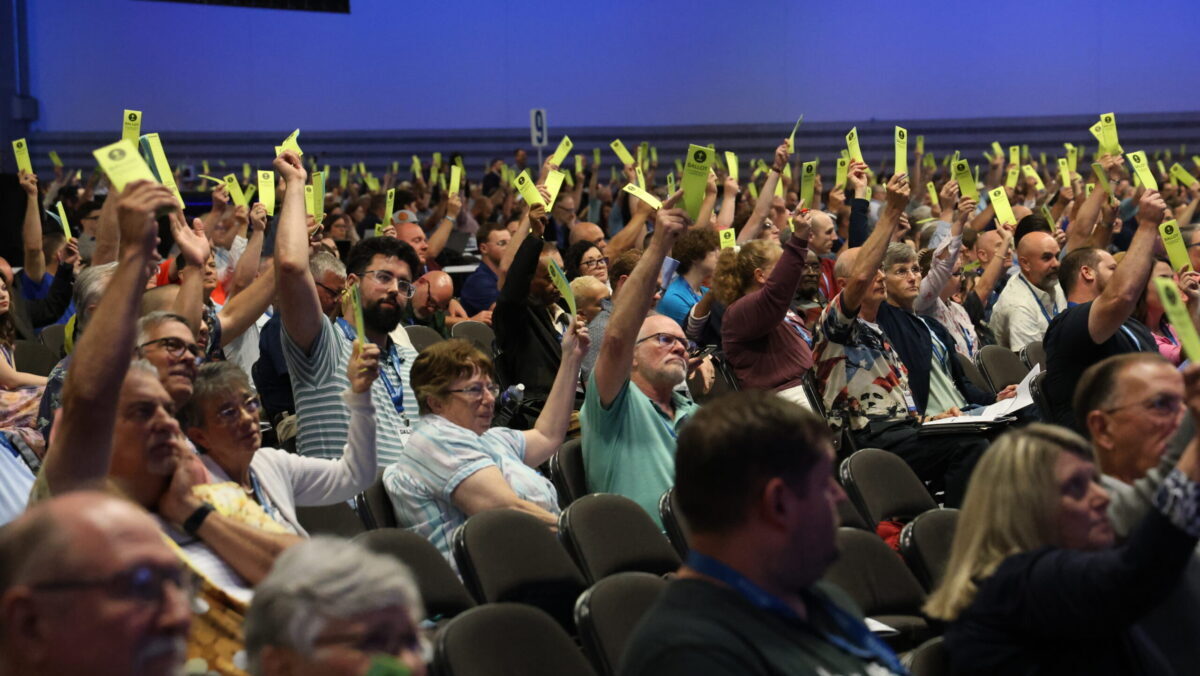
Number two, another issue being raised is that 25% of the messengers voted against the amendment, and some have concluded that this means 25% of Southern Baptists support women pastors.
That is simply inaccurate.
I would argue that an overwhelming majority of those who voted against the amendment still believe the office of pastor is reserved for men. Their concern was not with the doctrine itself but with whether the amendment was necessary since they believed the current process was already sufficient.
In other words, this was not a 25% versus 75% split over women pastors. In many cases it was a disagreement over process, not doctrine.
Let me also say this clearly: the Southern Baptist Convention is not sexist or misogynistic. Southern Baptists are simply attempting to uphold what they believe Scripture teaches.
We do not believe women are less valuable than men. We do not believe women are less intelligent than men. We do not believe women are spiritually inferior to men. Men and women are equally created in the image of God and equally loved by God. We simply believe God has assigned different roles and responsibilities within the home and the church.
That is my personal conviction because I believe that is what the Scriptures teach.
Now that doesn’t mean women can’t serve in ministry. Of course they can.
Women like Lottie Moon and Annie Armstrong had an enormous impact on the spread of the gospel. Women serve as missionaries, teachers, disciplers, counselors, and ministry leaders in countless ways.
In fact, the first witness of the risen Christ was a woman. Mary Magdalene was the first person commissioned to announce the resurrection of Jesus. God chose a woman to carry the first resurrection message.
In the New Testament, women pray in the church, prophesy in the church, share the gospel, disciple others, and teach in appropriate contexts. God has always used women in powerful ways.
The issue is not whether women can minister. The issue is whether women can hold the office of pastor.
‘Misunderstood’ teaching
Paul’s teaching in 1 Timothy 2:11–15 is often misunderstood as diminishing the value of women, but a closer look reveals that his concern is not about worth but about God’s design for order within the church.
While some interpret Paul’s instruction for women to remain quiet as a prohibition against all forms of ministry, the broader New Testament makes clear that women actively prayed, prophesied, taught other women, and served in significant ministry roles.
The issue Paul addresses is not whether women can serve, teach, or use their spiritual gifts. Rather, he places a specific limitation on the office of teaching authority within the gathered church. According to Paul, the role of doctrinal oversight and spiritual authority, what the New Testament describes as the offices of pastor, elder, or overseer, is reserved for qualified men.
‘Pointing back to creation’
Paul supports this instruction not by appealing to local culture but by pointing back to creation itself. His argument is rooted in God’s design for the home and the church. The issue is not capability, intelligence, or spiritual maturity; it is a matter of divinely assigned responsibility. Just as God has established different roles within the family, He has also established different responsibilities within the church.
At the same time, Scripture never presents women as second-class citizens in God’s Kingdom. In fact, Paul concludes the passage by highlighting a unique and indispensable role God has entrusted to women. Through motherhood and the spiritual influence they exercise within their families, women have a profound impact on future generations.
Timothy himself is presented as an example of this influence, with Paul specifically crediting the faith of his mother Eunice and grandmother Lois for shaping his spiritual life.
Not about ‘superiority or inferiority’
The biblical picture is not one of superiority or inferiority but of complementary roles. While there are certain responsibilities God has reserved for men, there are also unique callings and opportunities for influence that God has entrusted to women.
The church flourishes when both men and women faithfully embrace the roles God has given them and use their gifts for His glory.
Reasonable Christians can disagree on these issues, but Southern Baptists should not apologize for holding the position we have historically held. The SBC is simply attempting to follow what it believes Scripture teaches. Whether one agrees with that interpretation or not, it should at least be acknowledged that this debate is ultimately about biblical conviction, not about the value or worth of women.