EDITOR’S NOTE — The Baptist Paper staff members have completed their review of the audio files from the 2009–2010 meetings of the Great Commission Resurgence Task Force. (See all nine related articles here.)
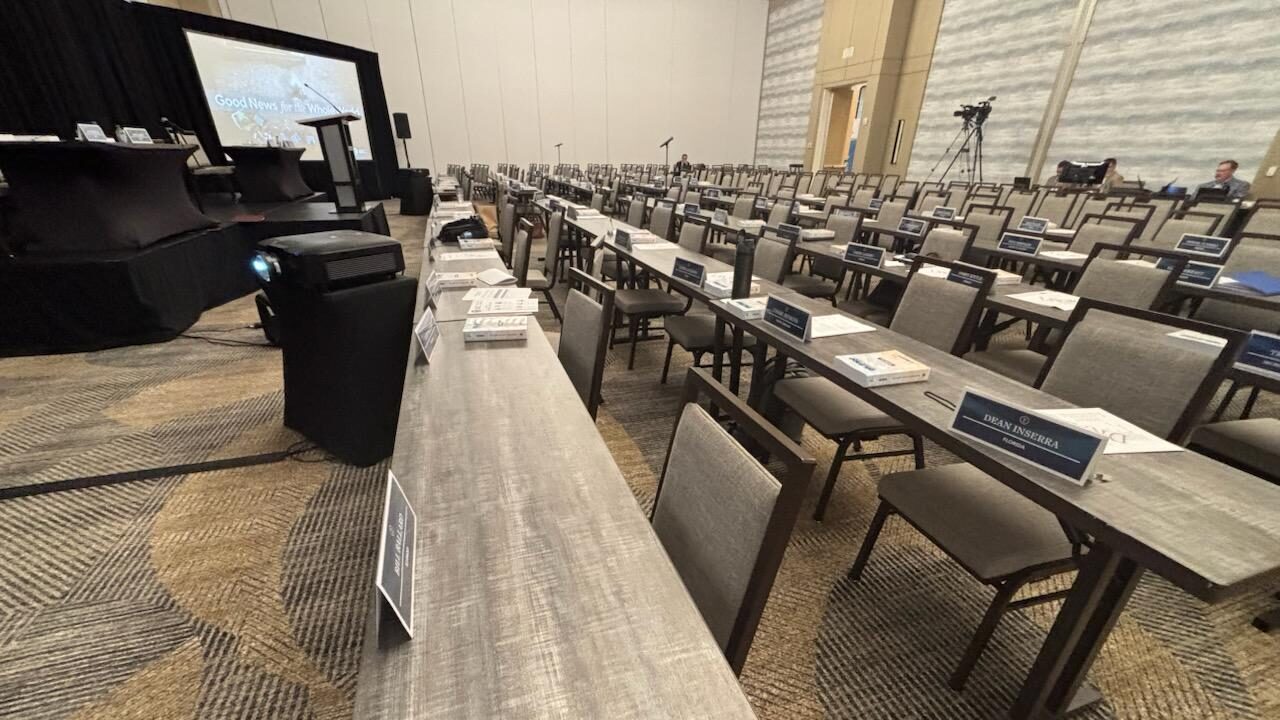
The final official GCR Task Force meeting began in Nashville on April 26, 2010. “Here we are,” chair Ronnie Floyd declared as he ran through a few housekeeping items. He mentioned task force member J.D. Greear was unable to attend the meeting. Task force members Donna Gaines and Jim Richards had not yet arrived at the start of the meeting, but Floyd said they planned to attend. The task force was meeting 50 days before the opening gavel of the 2010 SBC Annual Meeting in Orlando, Florida.
For more stories at your doorstep, subscribe to The Baptist Paper.
SIGN UP for our weekly Highlights emails.
“We are on a winning ball club,” Floyd declared. “We may lose the vote, but we’re not going to lose the battle. … God has so changed my life. You have good weeks, and you have bad weeks in this battle. We must not get tired of doing good. We will reap at the proper time if we do not give up.”
Floyd continued, “I think you will find we have heard Southern Baptists. I believe you will find we are working for the good of all.”
The task force ran through a list of side items for SBC messengers to hear, and at some point consider addressing, but that were not included in the final report. These were compiled by task force members Bob White, Frank Page, Harry Lewis and Richards. Among those issues were race relations, Christian education and a variety of other issues and ministry.
Floyd gave the task force an hour to read through the formal report and make notes on possible revisions. Hoping to avoid nitpicky edits being made late into the day, he cautioned the group not to get too caught up in personal preferences but to look at the overall message and concepts.
“Nothing that we have is sacred, but we have acted as a committee,” he noted. “We will be here until midnight if we scrutinize every word.”
‘We’re going to be here all day’
Al Mohler, task force member and president of Southern Baptist Theological Seminary, was designated the “main general editor and overseer” of finalizing the written report and went through each line. Floyd said the purpose of the editing session was to make sure they send a clear message that they have listened to Southern Baptists.
Mohler noted that he wrote the report “with the present very much in mind … but also with a sense of history.” He added, “We connect to the past, and we want to be well-remembered by the future.”
The task force once again discussed cooperative agreements and how the plan had been adjusted from phasing them out in five years to “hopefully within seven years.” The committee discussed the use of “pioneer” states and how it was more timely to refer to them as “underserved areas.”
Barry McCarty, who serves as parliamentarian at SBC annual meetings, reviewed the report and noted that it was “very carefully crafted” and he did not note any specific concerns.
Page, a self-described “obstructionist” in the report process, at one point noted he also was “overall pleased with the report” and believed it would pass.
As the group went through the report, scrutinizing every single word sentence by sentence became too much of a temptation for the task force to resist.
At one point an exasperated Mohler noted, “We’re going to be here all day.” But the frustration seemed to be short-lived. The team pressed forward.
The task force also revisited decisions involving the Executive Committee and criticism they had received since their progress report at the EC meeting that February.
“For the Executive Committee’s present leadership to accuse us of going after them, and we’re picking on them, it’s junk,” Floyd noted. “They run the stinking Southern Baptist Convention. … They can sink everything we’re doing if they so choose to … because of the bylaws, which is fine. That’s the way it is supposed to be.”
GPS strategy ‘making a difference’
The discussion moved to evangelism, and Page revisited the evangelism effort that the North American Mission Board was currently trying to get off the ground.
“God’s Plan for Sharing (GPS) emphasis (the 10-year strategy plan set to begin that year and that NAMB was heavily promoting) is making a difference,” said Page, who at the time served as vice president of evangelization for NAMB.
Page described GPS as a strategy that “encourages churches to have revivals, to have neighborhood block parties, whatever it takes to win the lost for Christ. It is very exciting.”
He noted several states that were up “significantly” in baptisms — South Carolina, Alabama, Montana and Wyoming. “Most of our states that are reporting (are up in baptisms),” Page noted.
“All that I know of so far have reported, and we believe next year, we will see significant gains because the GPS will really start kicking in 2011.”
He added, “We may see some tremendous turnaround in baptisms in the coming days. I think we may even see it this year, which would be very exciting for our country after so long of decrease.”
“But just know,” Page added, “the North American Mission Board is promoting the use of revivals, evangelism, evangelists.”
Floyd responded, “Great. Good report. Encouraging.”
Some task force discussion continued on how the SBC is in “serious trouble with evangelists,” but it is not clear who made that comment. The task force member went on to note how Texas had one of the largest fellowships of evangelists in the country, averaging about 200 active participants. But in January they had to cancel a two-day retreat because there was not enough participation.
The final report eventually was approved by the committee.
White, task force member and then-executive director of the Georgia Baptist Convention, noted he didn’t see why Southern Baptists “wouldn’t be thrilled to death and excited about (the report).”
Floyd agreed and later added, “Bottom line is we’re putting our lives on the line here, guys. And we need to be able to tell our folks, ‘Hey, this is where we’re going.’”
The committee discussed upcoming events, addressing the media and setting up meetings with state convention executives and entity leaders to get their impressions on the report after its release to the public for feedback.
Floyd engaged the task force for more discussion on who should be included and which leaders they needed to make sure were on board.
At one point, Mohler interjected, “I say at this point, our report is in formal territory. I think we invite everybody at every table. I think to fail to do that looks like we’re overly strategizing, overly marketing.
“I say if we have something with state convention execs, invite every one of them. If we have something with SBC entity heads, invite every one of them.”
He joked, “If we have something with the third sons of British royalty, invite every one of them.”
Special prayer time
Floyd reminded the task force to be at a special prayer time during an evening session of the SBC Pastors Conference in Orlando. Kevin Ezell, then pastor of Highview Baptist Church in Louisville, Kentucky (who would be named the next president of NAMB later that year), served as president of the Pastors Conference that year.
“The Monday night at the Pastors Conference, everyone needs to be at the Pastors Conference if at all possible,” Floyd said. “They want to have us on the stage. Kevin called me last July and said, ‘You tell me whatever you want me to do to help the GCR, and I’ll do it.’ I said, ‘Kevin, you just need to pray about it, seek the Lord. I’ll pray about it for you.’ He’s had such a great spirit.
“The bottom line is Kevin … is determined that every session, he’s going to have one of our pastors on the GCR to stand up and to give a two-minute testimony and a three-minute prayer, praying for the GCR report. … In other words building anticipation,” Floyd said.
Deciding when to unseal the task force files
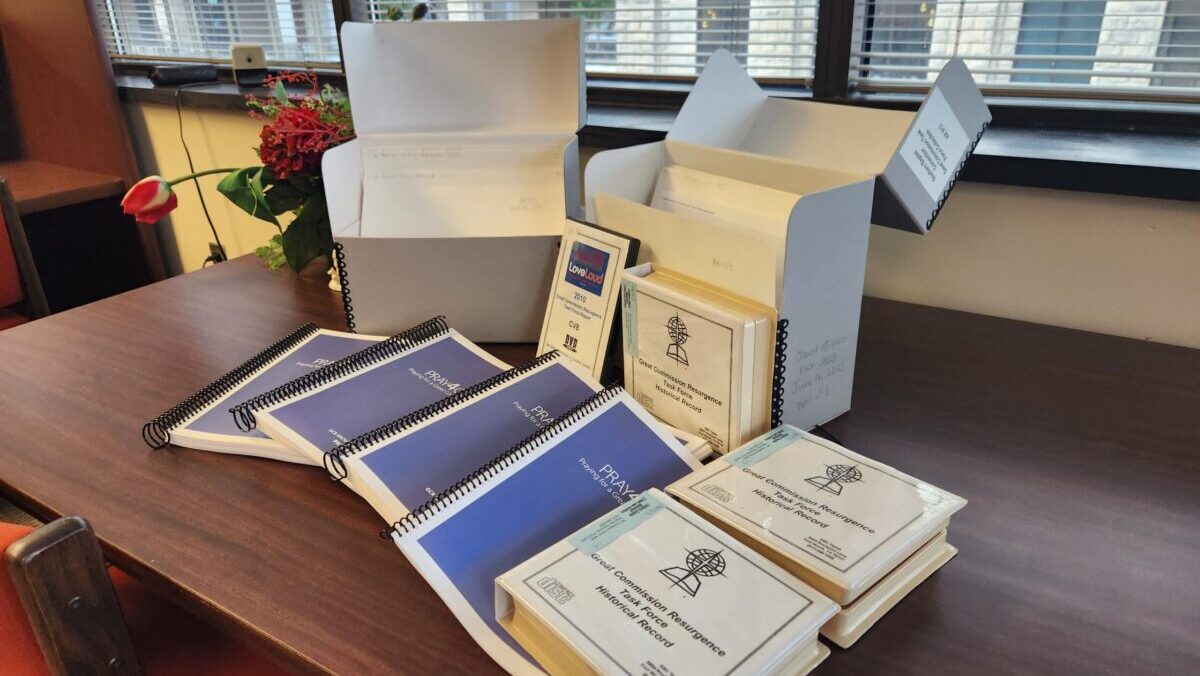
Ken Whitten, task force member and then pastor of the Tampa-area Idlewild Baptist Church in Lutz, Florida, asked when the meeting recordings would be unsealed. Floyd said the plan was to unseal them in 10 years, but he noted that timeframe could be adjusted.
Page at one point said, “Well, we better not change it (to be less than 10 years), or I wouldn’t have said half the things I said.”
Mohler jokingly suggested they follow the example of the “Warren Commission,” a group tasked with investigating the assassination of President John F. Kennedy, and set the release to be “15 years after the death of the last surviving member.” Laughter followed.
Danny Akin, task force member and president of Southeastern Baptist Theological Seminary, concluded that “no one will care” about the task force meeting files in 10 years. He asked how many listened to the 1985 Peace Committee meetings related to the Conservative Resurgence and then said that only a few people listened to it. “Al, me … and a doctoral student.”
After hearing several task force members say “15,” Floyd agreed the files would be unsealed in 15 years.
The group concluded their final meeting in prayer and in singing “To God be the Glory.”
EDITOR’S NOTE — This story was written and compiled by Shawn Hendricks, content editor for The Baptist Paper.